Nar Suclus
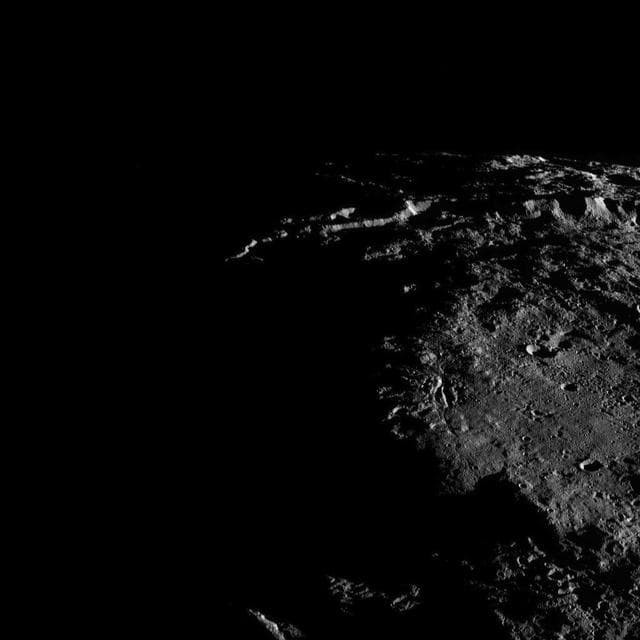
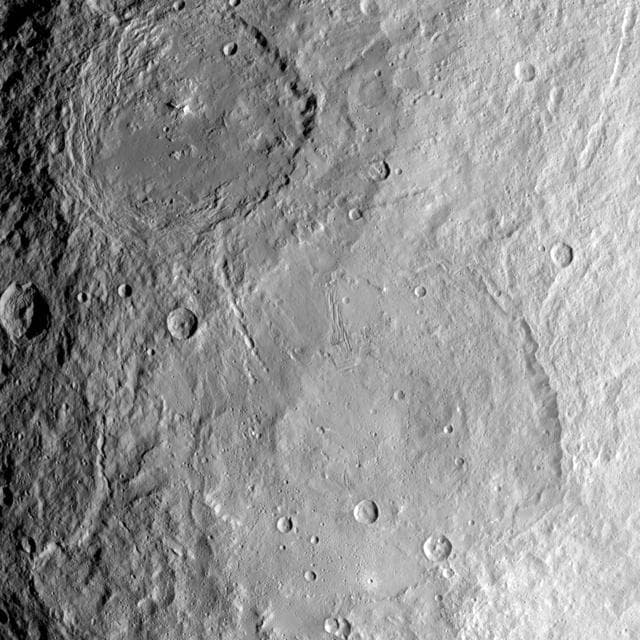
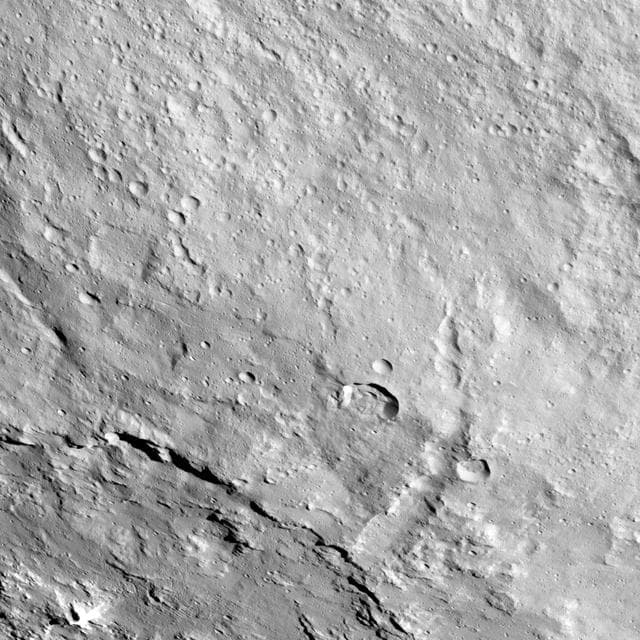
This image shows the eastern part of a feature called Nar Sulcus in Yalode Crater on dwarf planet Ceres, as seen by NASA's Dawn spacecraft. The term "sulcus" (plural: sulci) describes terrain with long, parallel fractures. Sulci are very common on icy moons -- for example, at the south pole of Enceladus, as seen in PIA11686. Nar Sulcus, 31 miles (50 kilometer) long, is the only feature of its kind identified on Ceres. It may point to an episode of tectonic deformation resulting from the evolution of the crater, which is the second largest on Ceres. The impact that formed Yalode heated Ceres' mixture of ice, rock and salt, perhaps causing a large volume to melt. When this material subsequently refroze, it would expand (just as water does when it turns to ice in your freezer). That may have created stresses that fractured the ground, forming Nar Sulcus. The name "Nar Sulcus" refers to the Azerbaijani festival of the pomegranate harvest. That festival is held in October and November in the city of Goychay, center of pomegranate cultivation in Azerbaijan. Dawn took this image on August 15, 2016, from its low-altitude mapping orbit, at a distance of about 240 miles (385 kilometers) above the surface. The image resolution is 120 feet (35 meters) per pixel. https://photojournal.jpl.nasa.gov/catalog/PIA21400
Usage Rights
Most NASA images are in the public domain and free to use. Credit NASA as the source. Check NASA's media usage guidelines for details. Images featuring identifiable individuals may require additional permissions.
Keywords
Details
NASA ID
PIA21400
Date Created
March 30, 2017
Center
JPL
Media Type
image
Downloads
Download this image in multiple resolutions. All NASA media are free for public use.