North Polar Gypsum Dunes in Olympia Undae
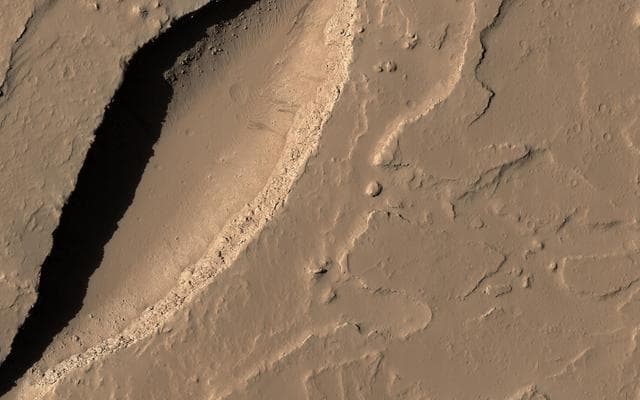
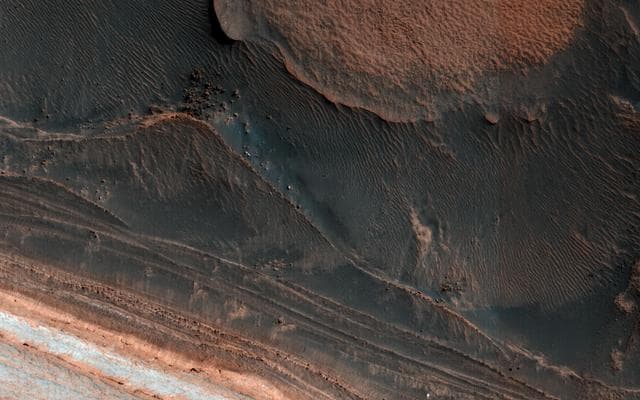
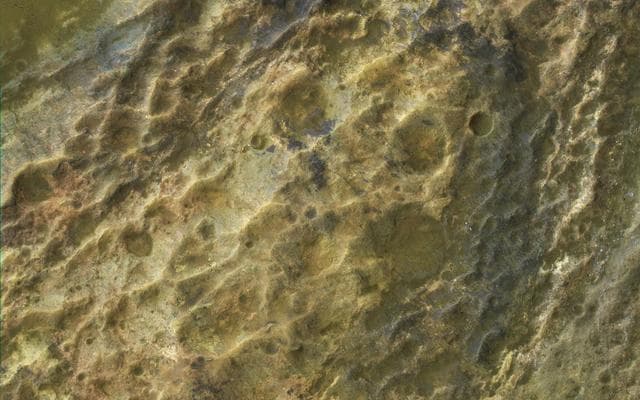
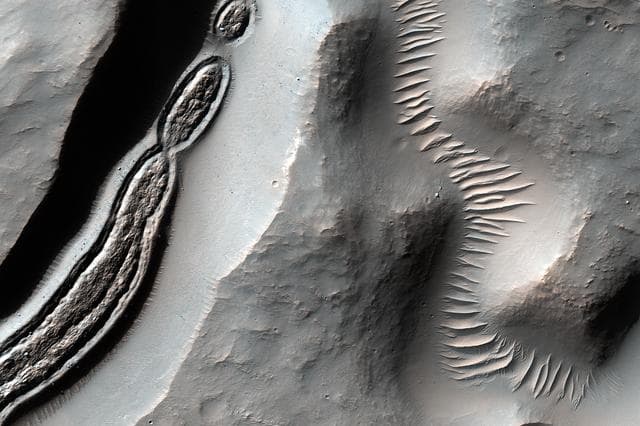
These sand dunes are a type of aeolian bedform and partly encircle the Martian North Pole in a region called Olympia Undae. Unlike most of the sand dunes on Mars that are made of the volcanic rock basalt, these are made of a type of sulfate mineral called gypsum. Whence the sand? Well, gypsum is a mineral that can often form from the evaporation of water that has sulfur and calcium dissolved in it. This sand was probably sourced from a northern region on Mars that used to be quite wet. The boxy gridding of the dunes indicates that the wind blows in multiple directions. Note: "Aeolian" means wind-blown and "bedform" means piles of sediment shaped by a flowing fluid (liquid or gas). http://photojournal.jpl.nasa.gov/catalog/PIA20743
Usage Rights
Most NASA images are in the public domain and free to use. Credit NASA as the source. Check NASA's media usage guidelines for details. Images featuring identifiable individuals may require additional permissions.
Details
NASA ID
PIA20743
Date Created
July 15, 2016
Center
JPL
Media Type
image
Downloads
Download this image in multiple resolutions. All NASA media are free for public use.