Hypothetical Rejuvenated Planets Artist Concept
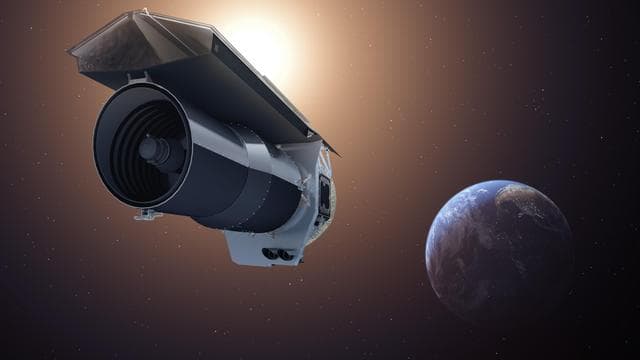
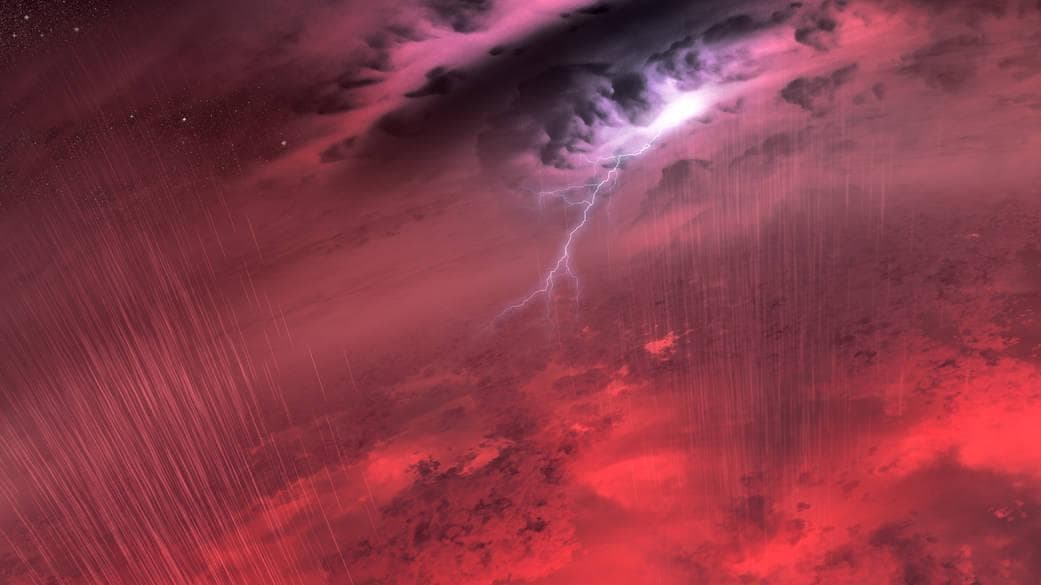
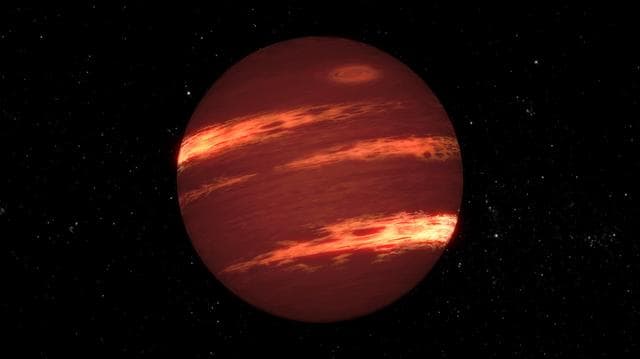
This artist's concept shows a hypothetical "rejuvenated" planet -- a gas giant that has reclaimed its youthful infrared glow. NASA's Spitzer Space Telescope found tentative evidence for one such planet around a dead star, or white dwarf, called PG 0010+280 (depicted as white dot in illustration). When planets are young, they are warm and toasty due to internal heat left over from their formation. Planets cool over time -- until they are possibly rejuvenated. The theory goes that this Jupiter-like planet, which orbits far from its star, would accumulate some of the material sloughed off by its star as the star was dying. The material would cause the planet to swell in mass. As the material fell onto the planet, it would heat up due to friction and glow with infrared light. The final result would be an old planet, billions of years in age, radiating infrared light as it did in its youth. Spitzer detected an excess infrared light around the white dwarf PG 0010+280. Astronomers aren't sure where the light is coming from, but one possibility is a rejuvenated planet. Future observations may help solve the mystery. A Jupiter-like planet is about ten times the size of a white dwarf. White dwarfs are about the size of Earth, so one white dwarf would easily fit into the Great Red Spot on Jupiter! http://photojournal.jpl.nasa.gov/catalog/PIA19346
Usage Rights
Most NASA images are in the public domain and free to use. Credit NASA as the source. Check NASA's media usage guidelines for details. Images featuring identifiable individuals may require additional permissions.
Details
NASA ID
PIA19346
Date Created
June 25, 2015
Center
JPL
Media Type
image
Downloads
Download this image in multiple resolutions. All NASA media are free for public use.