Riddle Me This
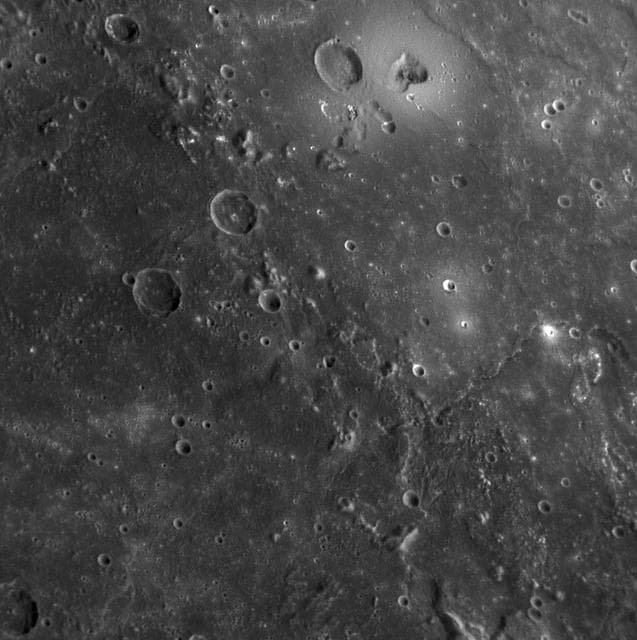
This view shows two craters in an area of smooth plains. The crater on the left presents an interesting geological puzzle. Note that about 90° of the rim (in the east, the right side) is sharp. But the remaining 270° of the circumference consists of a broad terrace, formed by slumping and inward movement of material. Why do you think that part of the rim and wall suffered slumping? Differences in the strength of the target material? (And, if so, caused by what?) The angle at which the impactor struck the surface? The topography of the surface? The presence of buried topography or structures? Local or regional tectonics? What additional data could help to solve this riddle? http://photojournal.jpl.nasa.gov/catalog/PIA19232
Usage Rights
Most NASA images are in the public domain and free to use. Credit NASA as the source. Check NASA's media usage guidelines for details. Images featuring identifiable individuals may require additional permissions.
Details
NASA ID
PIA19232
Date Created
March 9, 2015
Center
JPL
Media Type
image
Downloads
Download this image in multiple resolutions. All NASA media are free for public use.