All About That Basin
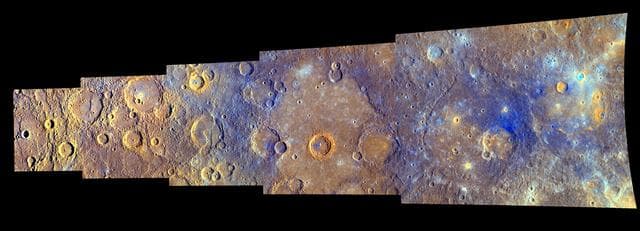
This mosaic of Caloris basin is an enhanced-color composite overlain on a monochrome mosaic featured in a previous post. The color mosaic is made up of WAC images obtained when both the spacecraft and the Sun were overhead, conditions best for discerning variations in albedo, or brightness. The monochrome mosaic is made up of WAC and NAC images obtained at off-vertical Sun angles (i.e., high incidence angles) and with visible shadows so as to reveal clearly the topographic form of geologic features. The combination of the two datasets allows the correlation of geologic features with their color properties. In portions of the scene, color differences from image to image are apparent. Ongoing calibration efforts by the MESSENGER team strive to minimize these differences. Caloris basin has been flooded by lavas that appear orange in this mosaic. Post-flooding craters have excavated material from beneath the surface. The larger of these craters have exposed low-reflectance material (blue in this mosaic) from beneath the surface lavas, likely giving a glimpse of the original basin floor material. Analysis of these craters yields an estimate of the thickness of the volcanic layer: 2.5-3.5 km (1.6-2.2 mi.). http://photojournal.jpl.nasa.gov/catalog/PIA19216
Usage Rights
Most NASA images are in the public domain and free to use. Credit NASA as the source. Check NASA's media usage guidelines for details. Images featuring identifiable individuals may require additional permissions.
Details
NASA ID
PIA19216
Date Created
February 25, 2015
Center
JPL
Media Type
image
Downloads
Download this image in multiple resolutions. All NASA media are free for public use.