Chasms on Dione
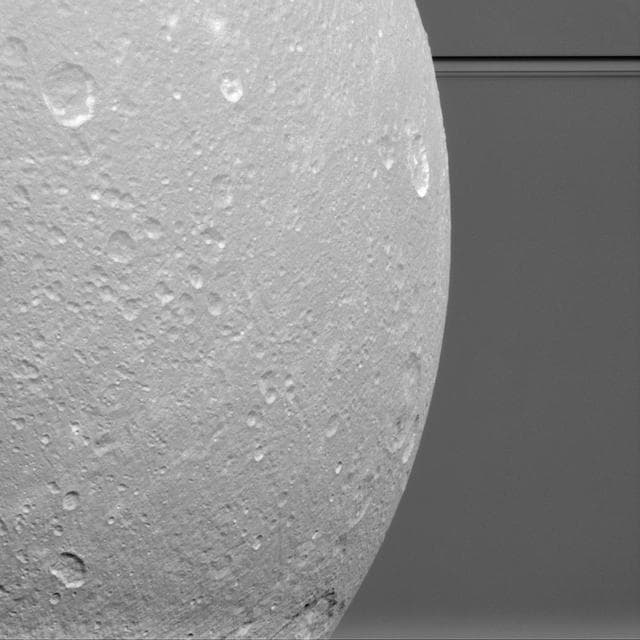
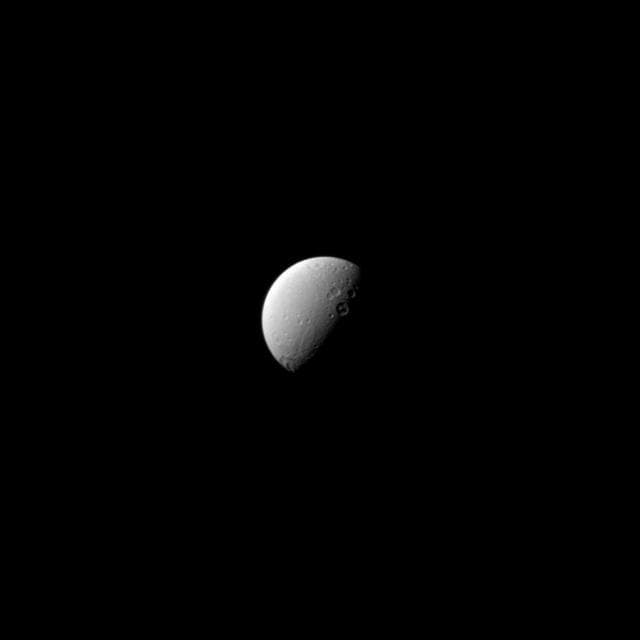
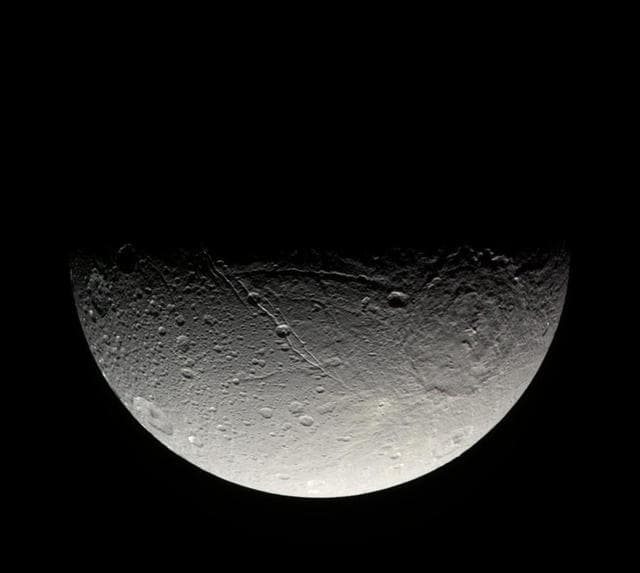
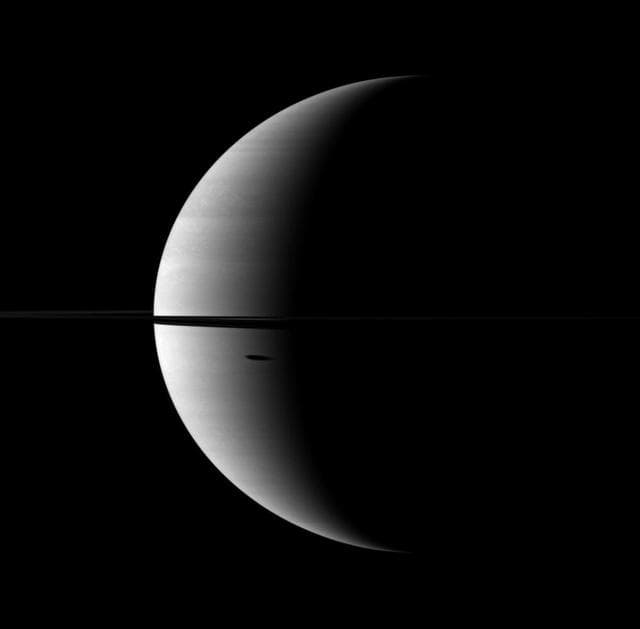
While not bursting with activity like its sister satellite Enceladus, the surface of Dione is definitely not boring. Some parts of the surface are covered by linear features, called chasmata, which provide dramatic contrast to the round impact craters that typically cover moons. The bright network of fractures on Dione (698 miles or 1123 kilometers across) was seen originally at poor resolution in Voyager images and was labeled as "wispy terrain." The nature of this terrain was unclear until Cassini showed that they weren't surface deposits of frost, as some had suspected, but rather a pattern of bright icy cliffs among myriad fractures. One possibility is that this stress pattern may be related to Dione's orbital evolution and the effect of tidal stresses over time. This view looks toward the trailing hemisphere of Dione. North on Dione is up. The image was taken in visible light with the Cassini spacecraft narrow-angle camera on April 11, 2015. The view was acquired at a distance of approximately 68,000 miles (110,000 kilometers) from Dione. Image scale is 2,200 feet (660 meters) per pixel. http://photojournal.jpl.nasa.gov/catalog/PIA18327
Usage Rights
Most NASA images are in the public domain and free to use. Credit NASA as the source. Check NASA's media usage guidelines for details. Images featuring identifiable individuals may require additional permissions.
Keywords
Details
NASA ID
PIA18327
Date Created
August 17, 2015
Center
JPL
Media Type
image
Downloads
Download this image in multiple resolutions. All NASA media are free for public use.