Not So Titanic
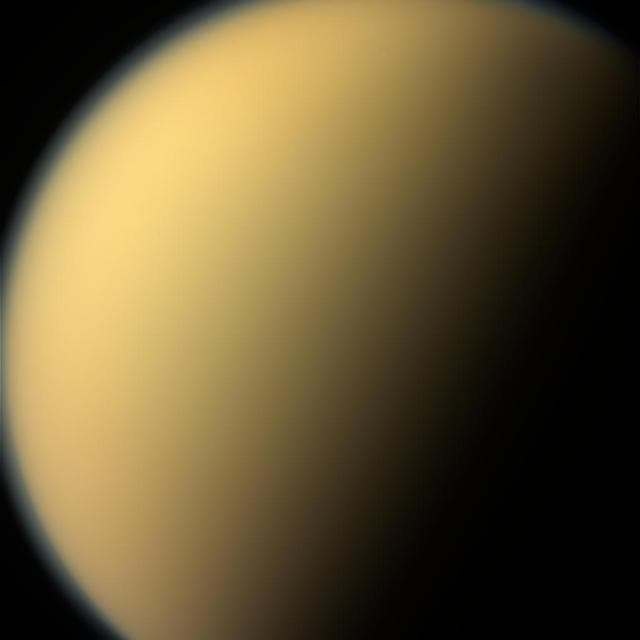
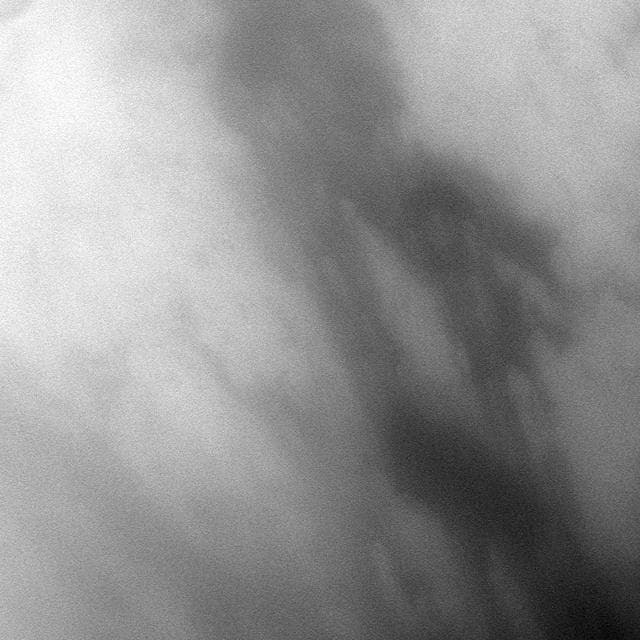
Titan may be a "large" moon -- its name even implies it! -- but it is still dwarfed by its parent planet, Saturn. As it turns out, this is perfectly normal. Although Titan (3200 miles or 5150 kilometers across) is the second-largest moon in the solar system, Saturn is still much bigger, with a diameter almost 23 times larger than Titan's. This disparity between planet and moon is the norm in the solar system. Earth's diameter is "only" 3.7 times our moon's diameter, making our natural satellite something of an oddity. (Another exception to the rule: dwarf planet Pluto's diameter is just under two times that of its moon.) So the question isn't why is Titan so small (relatively speaking), but why is Earth's moon so big? This view looks toward the anti-Saturn hemisphere of Titan. North on Titan is up. The image was taken with the Cassini spacecraft wide-angle camera on April 18, 2015 using a near-infrared spectral filter with a passband centered at 752 nanometers. The view was acquired at a distance of approximately 930,000 miles (1.5 million kilometers) from Titan. Image scale is 56 miles (90 kilometers) per pixel. http://photojournal.jpl.nasa.gov/catalog/PIA18326
Usage Rights
Most NASA images are in the public domain and free to use. Credit NASA as the source. Check NASA's media usage guidelines for details. Images featuring identifiable individuals may require additional permissions.
Keywords
Details
NASA ID
PIA18326
Date Created
July 13, 2015
Center
JPL
Media Type
image
Downloads
Download this image in multiple resolutions. All NASA media are free for public use.