Polar Scars
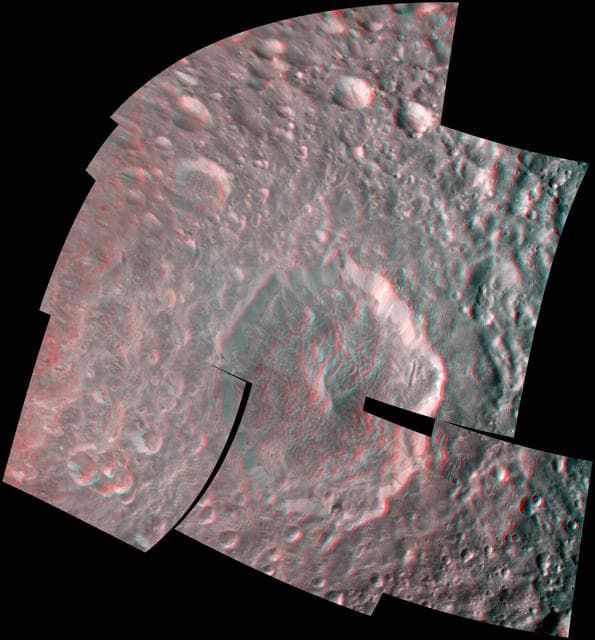
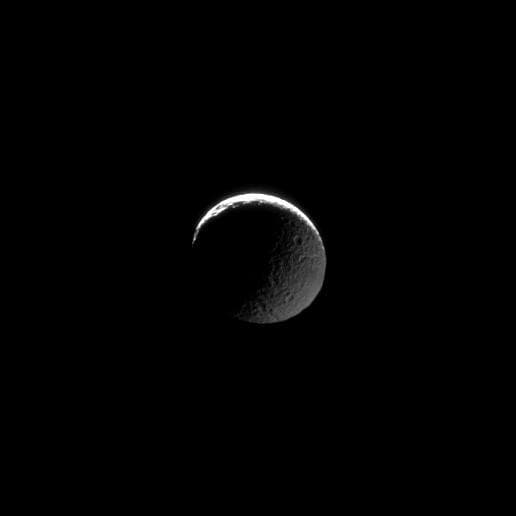
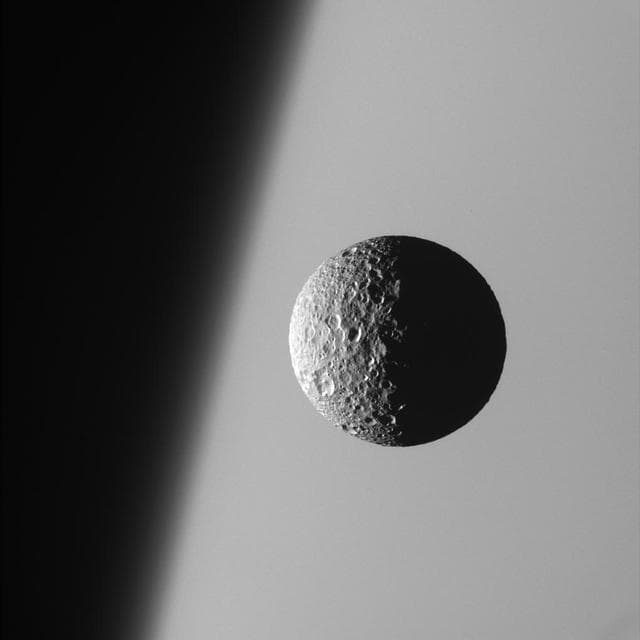
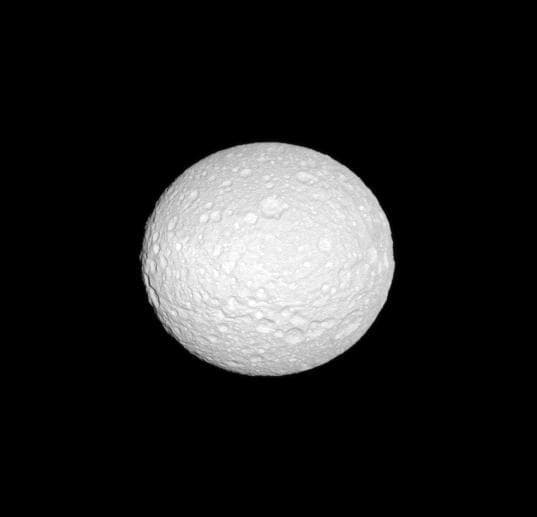
In addition to being evidence of past impacts, craters can serve another valuable scientific purpose. By counting the number of craters in an area, scientists can estimate the age of the terrain. Older surfaces, such as on Mimas (246 miles, or 396 kilometers across), will have more craters per unit area than younger surfaces. This view looks toward the trailing hemisphere of Mimas. North on Mimas is up and rotated 4 degrees to the left. The image was taken in visible light with the Cassini spacecraft narrow-angle camera on June 5, 2012. The view was acquired at a distance of approximately 31,000 miles (50,000 kilometers) from Mimas. Image scale is 982 feet (299 meters) per pixel. http://photojournal.jpl.nasa.gov/catalog/PIA18292
Usage Rights
Most NASA images are in the public domain and free to use. Credit NASA as the source. Check NASA's media usage guidelines for details. Images featuring identifiable individuals may require additional permissions.
Keywords
Details
NASA ID
PIA18292
Date Created
December 29, 2014
Center
JPL
Media Type
image
Downloads
Download this image in multiple resolutions. All NASA media are free for public use.