Raised Bedrock in Terra Cimmeria
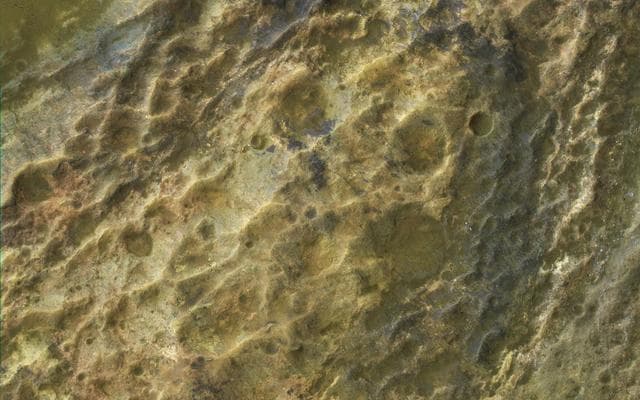
Large impact craters have central hills or mountains, because the tremendous shock waves from the impact first compresses the ground, then causes a rebound when it becomes uncompressed. This effectively raises bedrock that was once deeply buried to the surface. Furthermore, some of the most interesting bedrock on Mars is amongst the oldest and deeply buried. Thus, these crater central uplifts act as windows into ancient Mars, and enable us to peer into a time when certain geologic processes were more active than today. The enhanced colors in this image reflect different bedrock compositions. Some of the large blocks are broken up and jumbled by this impact event or were resampled from previous large impacts. http://photojournal.jpl.nasa.gov/catalog/PIA15149
Usage Rights
Most NASA images are in the public domain and free to use. Credit NASA as the source. Check NASA's media usage guidelines for details. Images featuring identifiable individuals may require additional permissions.
Details
NASA ID
PIA15149
Date Created
January 5, 2017
Center
JPL
Media Type
image
Downloads
Download this image in multiple resolutions. All NASA media are free for public use.