Sulfuric Acid on Europa
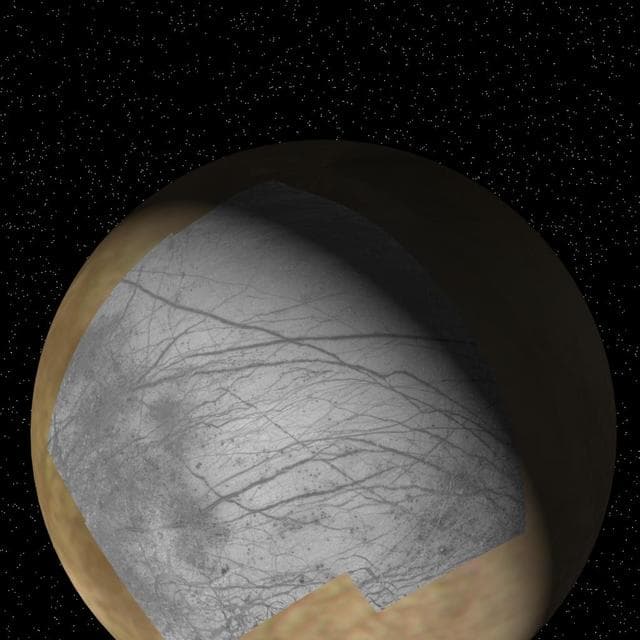
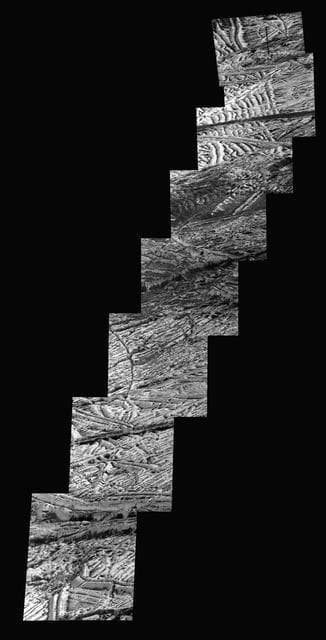
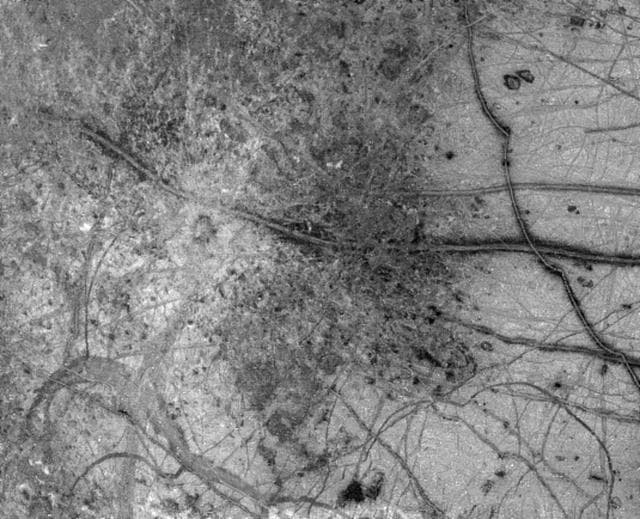
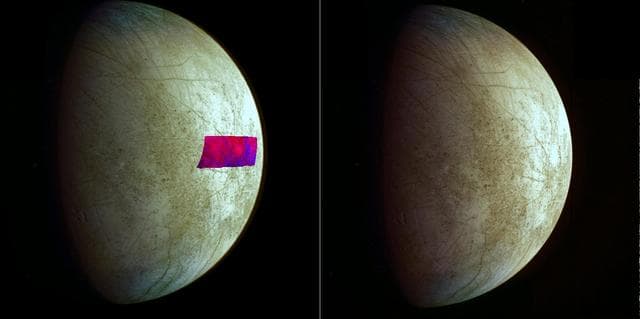
Frozen sulfuric acid on Jupiter's moon Europa is depicted in this image produced from data gathered by NASA's Galileo spacecraft. The brightest areas, where the yellow is most intense, represent regions of high frozen sulfuric acid concentration. Sulfuric acid is found in battery acid and in Earth's acid rain. This image is based on data gathered by Galileo's near infrared mapping spectrometer. Europa's leading hemisphere is toward the bottom right, and there are enhanced concentrations of sulfuric acid in the trailing side of Europa (the upper left side of the image). This is the face of Europa that is struck by sulfur ions coming from Jupiter's innermost moon, Io. The long, narrow features that crisscross Europa also show sulfuric acid that may be from sulfurous material extruded in cracks. http://photojournal.jpl.nasa.gov/catalog/PIA02500
Usage Rights
Most NASA images are in the public domain and free to use. Credit NASA as the source. Check NASA's media usage guidelines for details. Images featuring identifiable individuals may require additional permissions.
Details
NASA ID
PIA02500
Date Created
September 30, 1999
Center
JPL
Media Type
image
Downloads
Download this image in multiple resolutions. All NASA media are free for public use.