Jupiter Equatorial Region
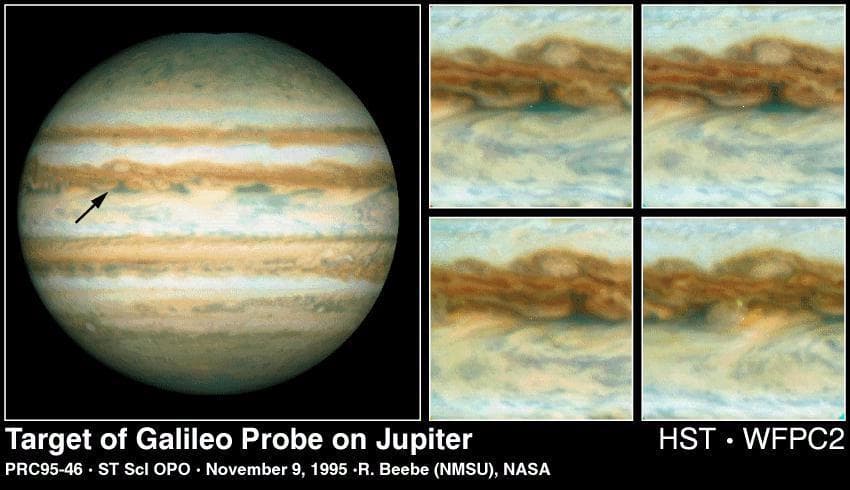
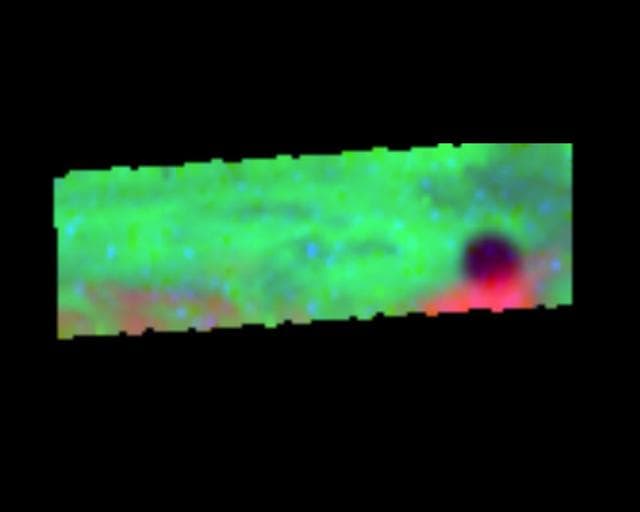
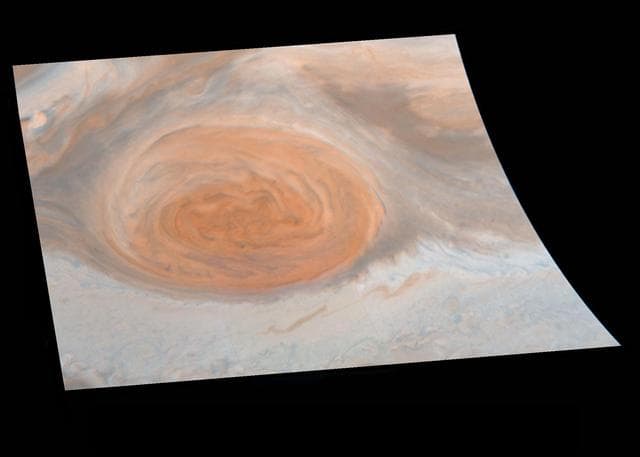
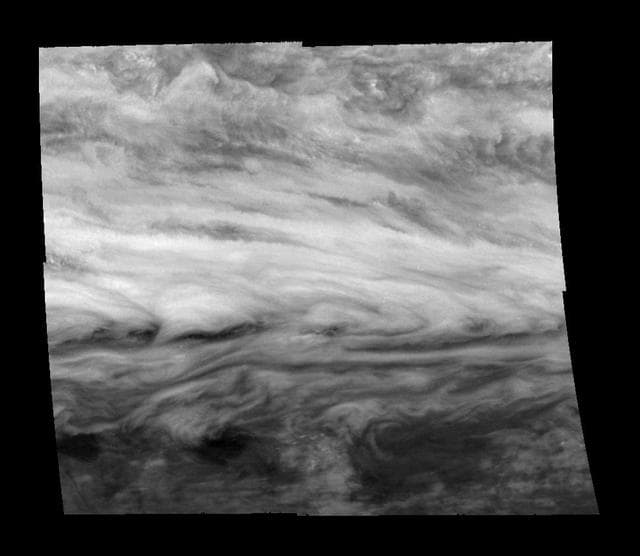
This photographic mosaic of images from NASA's Galileo spacecraft covers an area of 34,000 kilometers by 22,000 kilometers (about 21,100 by 13,600 miles) in Jupiter's equatorial region. The dark region near the center of the mosaic is an equatorial "hotspot" similar to the site where the Galileo Probe parachuted into Jupiter's atmosphere in December 1995. These features are holes in the bright, reflective, equatorial cloud layer where heat from Jupiter's deep atmosphere can pass through. The circulation patterns observed here along with the composition measurements from the Galileo Probe suggest that dry air may be converging and sinking over these regions, maintaining their cloud-free appearance. The bright oval in the upper right of the mosaic as well as the other smaller bright features are examples of upwelling of moist air and condensation. These images were taken on December 17, 1996, at a range of 1.5 million kilometers (about 930,000 miles) by the Solid State Imaging camera system aboard Galileo. North is at the top. The mosaic covers latitudes 1 to 19 degrees and is centered at longitude 336 degrees west. The smallest resolved features are tens of kilometers in size. http://photojournal.jpl.nasa.gov/catalog/PIA00604
Usage Rights
Most NASA images are in the public domain and free to use. Credit NASA as the source. Check NASA's media usage guidelines for details. Images featuring identifiable individuals may require additional permissions.
Details
NASA ID
PIA00604
Date Created
March 6, 1998
Center
JPL
Media Type
image
Downloads
Download this image in multiple resolutions. All NASA media are free for public use.