Venus - Multiple-Floored, Irregular Impact Crater
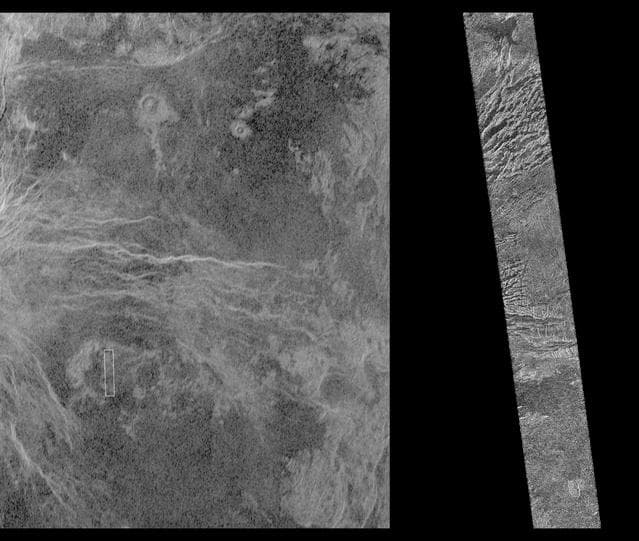
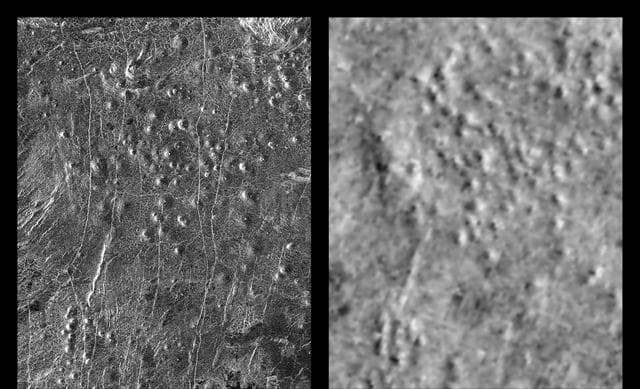
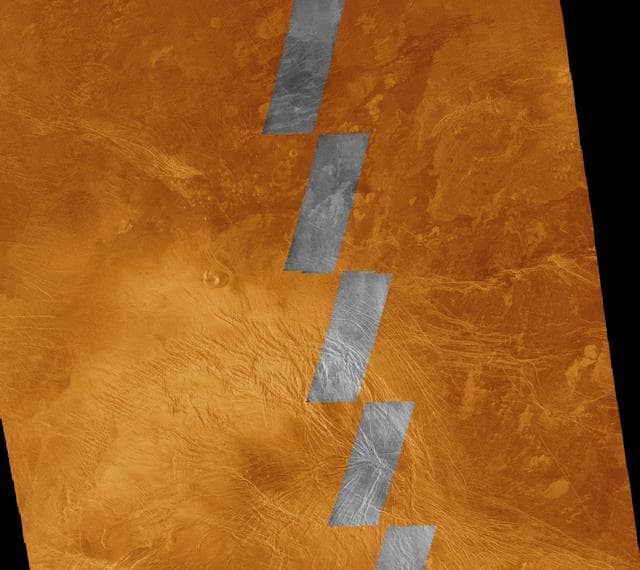
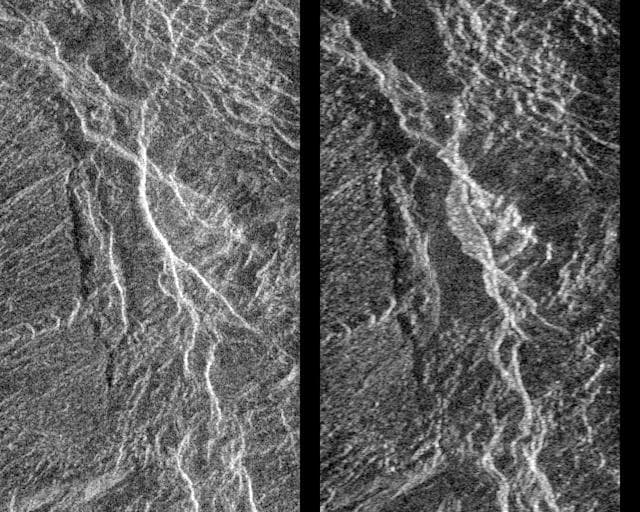
NASA' sMagellan imaged this multiple-floored, irregular impact crater at latitude 16.4 degrees north, longitude 352.1 degrees east, during orbits 481 and 482 on 27 September 1990. This crater, about 9.2 kilometers in maximum diameter, was formed on what appears to be a slightly fractured, radar-dark (smooth) plain. The abundant, low viscosity flows associated with this cratering event have, however, filled local, fault-controlled troughs (called graben). These shallow graben are well portrayed on this Magellan image but would be unrecognizable but for their coincidental infilling by the radar-bright crater flows. This fortuitous enhancement by the crater flows of fault structures that are below the resolution of the Magellan synthetic aperture radar is providing the Magellan Science Team with valuable geologic information. The flow deposits from the craters are thought to consist primarily of shock melted rock and fragmented debris resulting from the nearly simultaneous impacts of two projectile fragments into the hot (800 degrees Fahrenheit) surface rocks of Venus. The presence of the various floors of this irregular crater is interpreted to be the result of crushing, fragmentation, and eventual aerodynamic dispersion of a single entry projectile during passage through the dense Venusian atmosphere. http://photojournal.jpl.nasa.gov/catalog/PIA00462
Usage Rights
Most NASA images are in the public domain and free to use. Credit NASA as the source. Check NASA's media usage guidelines for details. Images featuring identifiable individuals may require additional permissions.
Details
NASA ID
PIA00462
Date Created
September 26, 1996
Center
JPL
Media Type
image
Downloads
Download this image in multiple resolutions. All NASA media are free for public use.