Neptune Rings and 1989N2
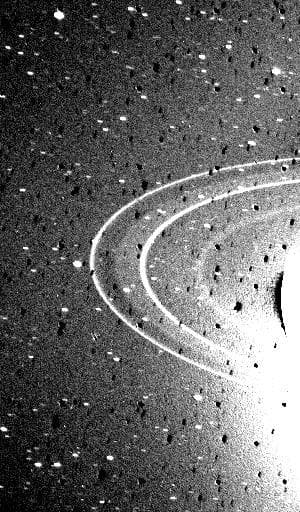
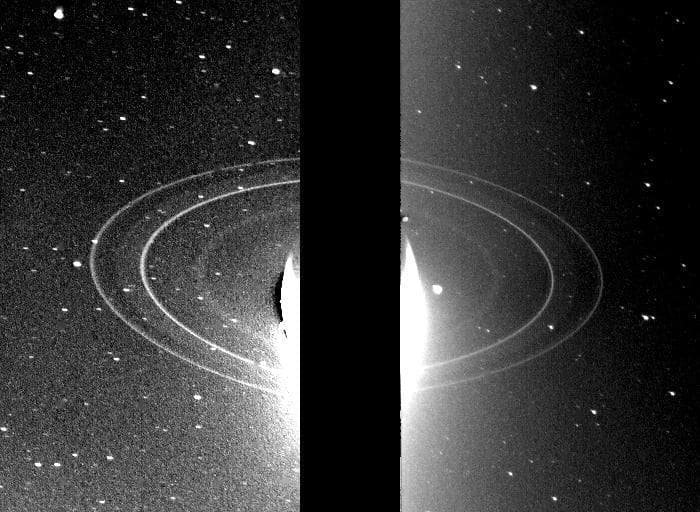
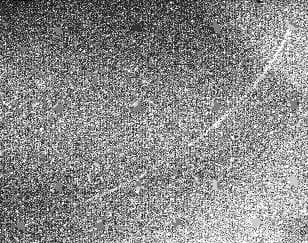
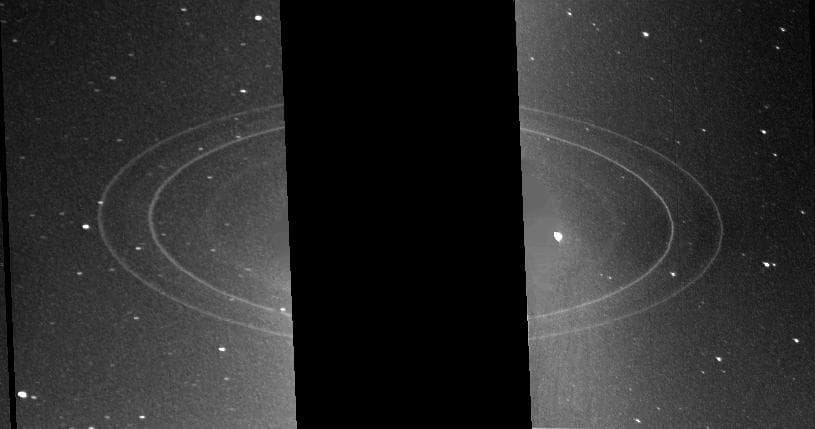
In this image from NASA's Voyager wide-angle taken on Aug. 23 1989, the two main rings of Neptune can be clearly seen. In the lower part of the frame the originally announced ring arc, consisting of three distinct features, is visible. This feature covers about 35 degrees of longitude and has yet to be radially resolved in Voyager images. From higher resolution images it is known that this region contains much more material than the diffuse belts seen elsewhere in its orbit, which seem to encircle the planet. This is consistent with the fact that ground-based observations of stellar occultations by the rings show them to be very broken and clumpy. The more sensitive wide-angle camera is revealing more widely distributed but fainter material. Each of these rings of material lies just outside of the orbit of a newly discovered moon. One of these moons, 1989N2, may be seen in the upper right corner. The moon is streaked by its orbital motion, whereas the stars in the frame are less smeared. The dark area around the bright moon and star are artifacts of the processing required to bring out the faint rings. This wide-angle image was taken from a range of 2 million kilometers (1.2 million miles), through the clear filter. http://photojournal.jpl.nasa.gov/catalog/PIA00053
Usage Rights
Most NASA images are in the public domain and free to use. Credit NASA as the source. Check NASA's media usage guidelines for details. Images featuring identifiable individuals may require additional permissions.
Details
NASA ID
PIA00053
Date Created
January 29, 1996
Center
JPL
Media Type
image
Downloads
Download this image in multiple resolutions. All NASA media are free for public use.