KSC-07pd3212
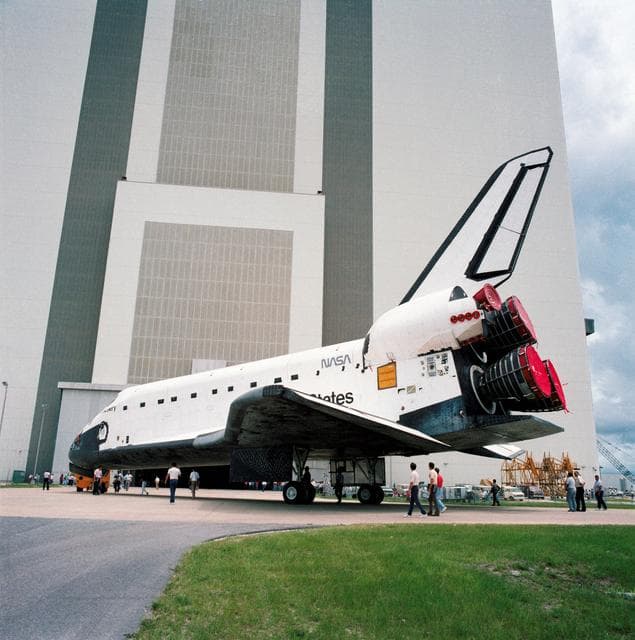
KENNEDY SPACE CENTER, FLA. -- On the Shuttle Landing Facility at NASA's Kennedy Space Center, a tractor tow vehicle is backed up to space shuttle Discovery. Towing normally begins approximately within four hours after landing and is completed within six hours unless removal of time-sensitive experiments require an additional period on the runway. Umbilicals are attached to purge the vehicle of any possible residual explosive or toxic fumes. The tractor tow vehicle will pull Discovery along a two-mile tow-way to the Orbiter Processing Facility, or OPF, where processing Discovery for another flight begins. The tow vehicle is very much like the typical towing units used for large aircraft, but it is equipped with a special towing bar designed specifically for the orbiter. In the OPF, turnaround processing procedures on Discovery will include various post-flight deservicing and maintenance functions, which are carried out in parallel with payload removal and the installation of equipment needed for the next mission. Before post-flight deservicing can continue beyond initial safing operations, certain vehicle systems must be mechanically secured and access platforms installed. Discovery completed mission STS-120 with an on-time landing at 1:01 p.m. EST. Photo credit: NASA/Kim Shiflett
Usage Rights
Most NASA images are in the public domain and free to use. Credit NASA as the source. Check NASA's media usage guidelines for details. Images featuring identifiable individuals may require additional permissions.
Keywords
Details
NASA ID
KSC-07pd3212
Date Created
November 7, 2007
Center
KSC
Media Type
image
Location
Kennedy Space Center, FL
Downloads
Download this image in multiple resolutions. All NASA media are free for public use.