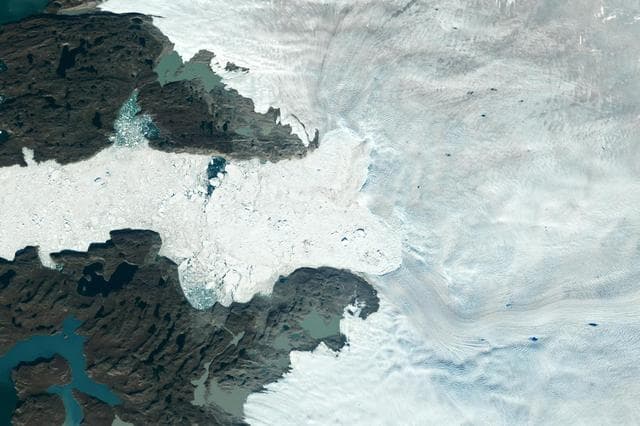
Scientists at the University of Alaska Fairbanks’ Geophysical Institute used data from NASA’s Operation IceBridge to develop a more accurate model of how the Greenland Ice Sheet might respond to climate change in the future, finding that it could generate more sea level rise than previously thought. In the next 50 years, the model shows that melting at the present rate could contribute one to four inches to global sea level rise. This number jumps to five to13 inches by 2100 and 19 to 63 inches by 2200. These numbers are considerably higher than previous estimates, which forecasted up to 35 inches of sea level rise by 2200 The updated model is the first to include outlet glaciers — river-like bodies of ice that connect to the ocean. Outlet glaciers play a key role in how ice sheets melt, but previous models lacked the data to adequately represent their complex flow patterns. The study found that melting outlet glaciers could account for up to 40% of the ice mass lost from Greenland in the next 200 years. By incorporating ice thickness data from IceBridge and identifying sources of statistical uncertainty within the model, the study creates a more accurate picture of how human-generated greenhouse gas emissions and a warming climate may affect Greenland in the future
Most NASA images are in the public domain and free to use. Credit NASA as the source. Check NASA's media usage guidelines for details. Images featuring identifiable individuals may require additional permissions.
NASA ID
GSFC_20190619_Greenland_m13233_Outlet
Date Created
June 19, 2019
Center
GSFC
Media Type
video
Photographer
Jefferson Beck
Location
Goddard Space Flight Center
Download this video in multiple resolutions. All NASA media are free for public use.
Captions
Subtitles