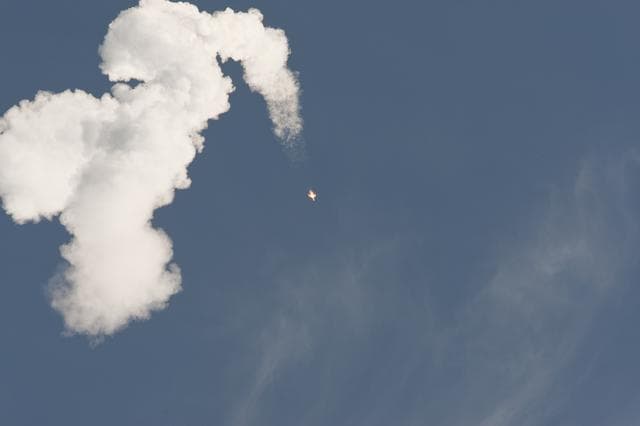
The Global-scale Observations of the Limb and Disk, or GOLD, instrument launches aboard a commercial communications satellite in January 2018 to inspect the dynamic intermingling of space and Earth’s uppermost atmosphere. Together, GOLD and another NASA mission, Ionospheric Connection Explorer spacecraft, or ICON, will provide the most comprehensive of Earth’s upper atmosphere we’ve ever had. Above the ozone layer, the ionosphere is a part of Earth’s atmosphere where particles have been cooked into a sea of electrically-charged electrons and ions by the Sun’s radiation. The ionosphere is co-mingled with the very highest — and quite thin — layers of Earth’s neutral upper atmosphere, making this region an area that is constantly in flux undergoing the push-and-pull between Earth’s conditions and those in space. Increasingly, these layers of near-Earth space are part of the human domain, as it’s home not only to astronauts, but to radio signals used to guide airplanes and ships, and satellites that provide our communications and GPS systems. Understanding the fundamental processes that govern our upper atmosphere and ionosphere is crucial to improve situational awareness that helps protect astronauts, spacecraft and humans on the ground. GOLD, in geostationary orbit over the Western Hemisphere, will build up a full-disk view of the ionosphere and upper atmosphere every half hour, providing detailed large-scale measurements of related processes — a cadence which makes it the first mission to be able to monitor the true weather of the upper atmosphere. GOLD is also able to focus in on a tighter region and scan more quickly, to complement additional research plans as needed.
Most NASA images are in the public domain and free to use. Credit NASA as the source. Check NASA's media usage guidelines for details. Images featuring identifiable individuals may require additional permissions.
NASA ID
GSFC_20180105_12817_GOLD_Overview
Date Created
January 5, 2018
Center
GSFC
Media Type
video
Location
Goddard Space Flight Center
Download this video in multiple resolutions. All NASA media are free for public use.
Captions
Subtitles