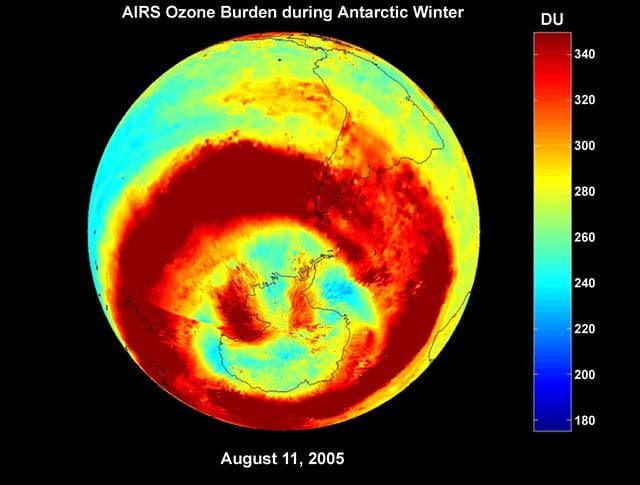
Scientists are closely monitoring positive signs of recovery of the Earth’s stratospheric ozone layer, which is depleted by the use of chemicals called chlorofluorocarbons (CFCs) for a range of industrial and commercial purposes. Even after the landmark Montreal Protocol banned these substances in the late 1980s, threats to the ozone layer persist. Scientists at NASA’s Goddard Space Flight Center including Susan Strahan and Qing Liang (both NASA/USRA) are weighing in to an ongoing debate about the relative impacts of continuing sources of ozone depletion, including short-lived chemicals not banned by the Protocol, the effects of climate change, and banned chemicals that are still being released into the atmosphere. All could potentially delay the recovery of the seasonal ozone hole over Antarctica.
Most NASA images are in the public domain and free to use. Credit NASA as the source. Check NASA's media usage guidelines for details. Images featuring identifiable individuals may require additional permissions.
NASA ID
GSFC_20171208_Ozone_m12797_Future
Date Created
December 8, 2017
Center
GSFC
Media Type
video
Photographer
Robert Andreoli, John Caldwell
Location
Goddard Space Flight Center
Download this video in multiple resolutions. All NASA media are free for public use.
Captions
Subtitles
AIRS Ozone Burden During Antarctic Winter: Time Series from 8/1/2005 to 9/30/2005
Jul 24, 2007
2009 Antarctic Ozone Hole
Dec 8, 2017
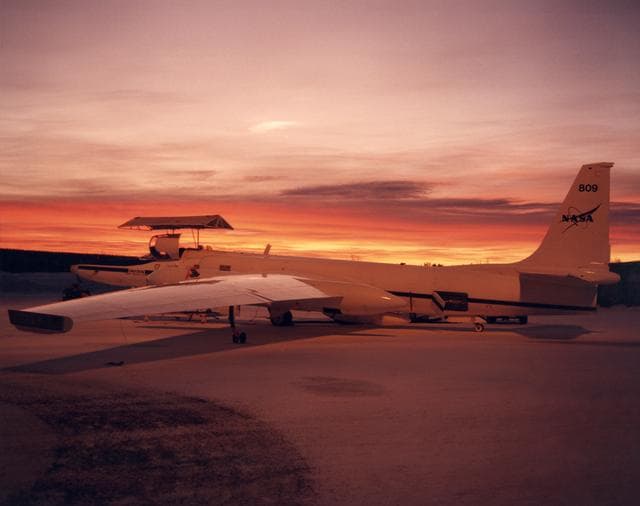
ER-2 #809 awaits pilot entry for the third flight of the SAGE III Ozone Loss and Validation Experiment (SOLVE)
Jan 28, 2000
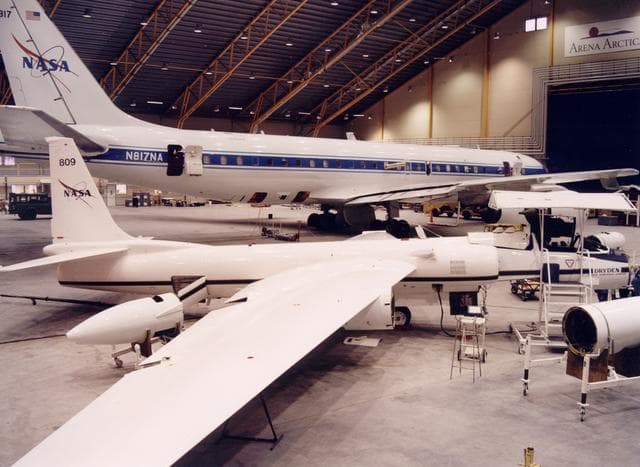
ER-2 #809 and DC-8 in Arena Arctica hangar in Kiruna, Sweden prior to the SAGE III Ozone Loss and Validation Experiment (SOLVE)
Jan 23, 2000