High above Alaska and Canada, researchers from NASA’s Arctic Boreal Vulnerability Experiment (ABoVE) are studying carbon emissions from a DC-8 plane. The plane carries new lidar instruments to measure concentrations of carbon dioxide and methane in the air, far below the aircraft. The plane also carries instruments that can measure carbon concentrations with extreme accuracy, but only from up-close. To check the accuracy of the lidar measurements, the team needs to fly the plane down to the lower altitudes the lidar is studying. Taking measurements at every altitude is no easy feat. The plane flies in looping spirals down to just about 100 feet above the ground, and then spirals back up to about 30,000 feet, taking measurements the whole time.
Most NASA images are in the public domain and free to use. Credit NASA as the source. Check NASA's media usage guidelines for details. Images featuring identifiable individuals may require additional permissions.
NASA ID
GSFC_20170810_Carbon_m12683_Canada
Date Created
August 10, 2017
Center
GSFC
Media Type
video
Location
Goddard Space Flight Center
Download this video in multiple resolutions. All NASA media are free for public use.
Captions
Subtitles
NASA scientists are flying over Alaska
Dec 8, 2017
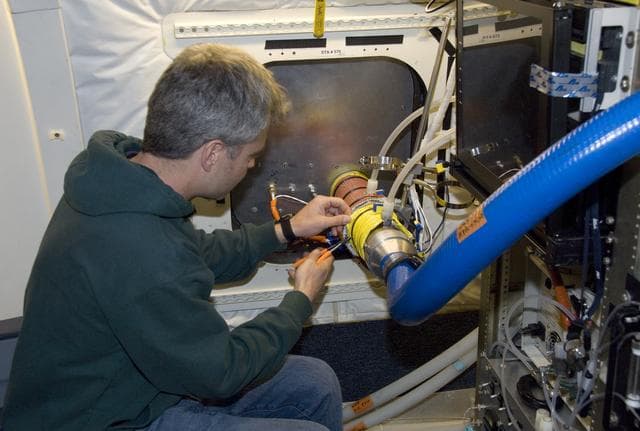
Eric Scheuer of the University of New Hampshire installs the Soluble Acidic Gases and Aerosol instrument in NASA's DC-8 for the ARCTAS mission
Mar 7, 2008
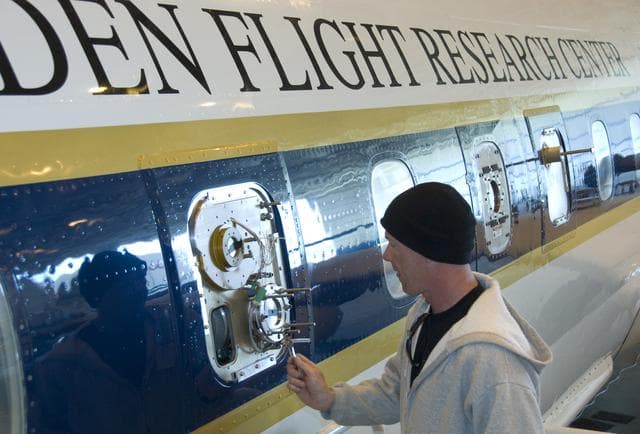
Lee Mauldin inspects the National Center for Atmospheric Research CIMS instrument probe on the exterior of NASA's DC-8 flying lab prior to the ARCTAS mission
Mar 7, 2008
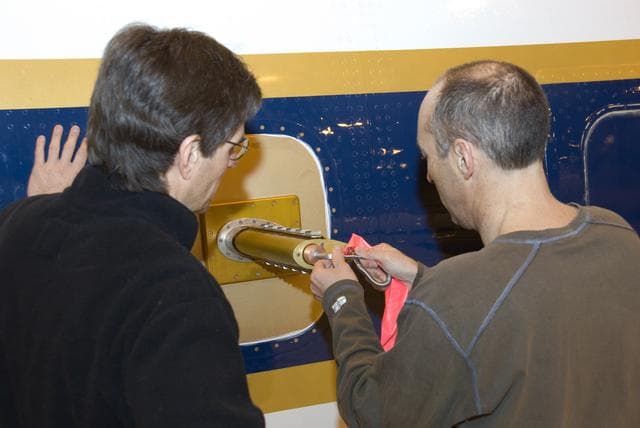
Eric Apel and Alan Hills of the National Center for Atmospheric Research install the Trace Organic Gas Analyzer's sensor probe on the exterior of NASA's DC-8
Mar 7, 2008