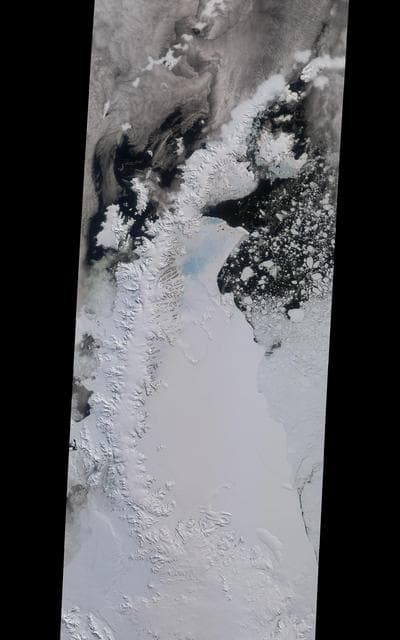
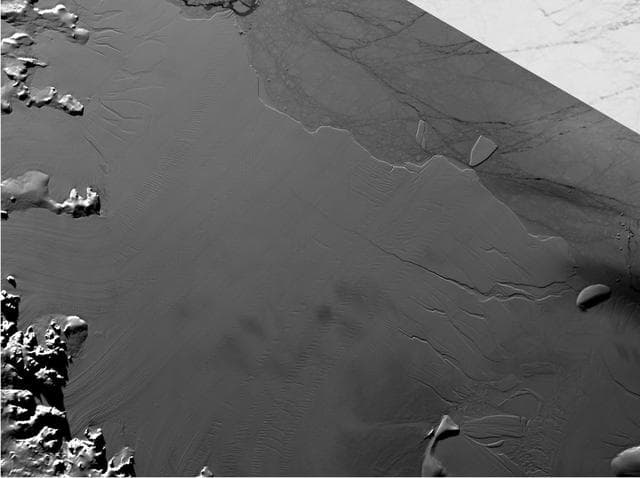
An iceberg about the size of the state of Delaware split off from Antarctica’s Larsen C ice shelf sometime between July 10 and July 12. The calving of the massive new iceberg was captured by the Moderate Resolution Imaging Spectroradiometer (MODIS) on NASA’s Aqua satellite. Larsen C, a floating platform of glacial ice on the east side of the Antarctic Peninsula, is the fourth largest ice shelf ringing Earth’s southernmost continent. In 2014, a crack that had been slowly growing into the ice shelf for decades suddenly started to spread northwards, creating the nascent iceberg. The growth of the crack has been tracked by Landsat satellites, which are jointly managed by NASA and the U.S. Geological Survey. Now that the close to 2240 square-mile (5800 square kilometers) chunk of ice has broken away, the Larsen C shelf area has shrunk by approximately 10 percent.
Most NASA images are in the public domain and free to use. Credit NASA as the source. Check NASA's media usage guidelines for details. Images featuring identifiable individuals may require additional permissions.
NASA ID
GSFC_20170712_Larsen_m12633_Crack
Date Created
July 12, 2017
Center
GSFC
Media Type
video
Location
Goddard Space Flight Center
Download this video in multiple resolutions. All NASA media are free for public use.
Captions
Subtitles