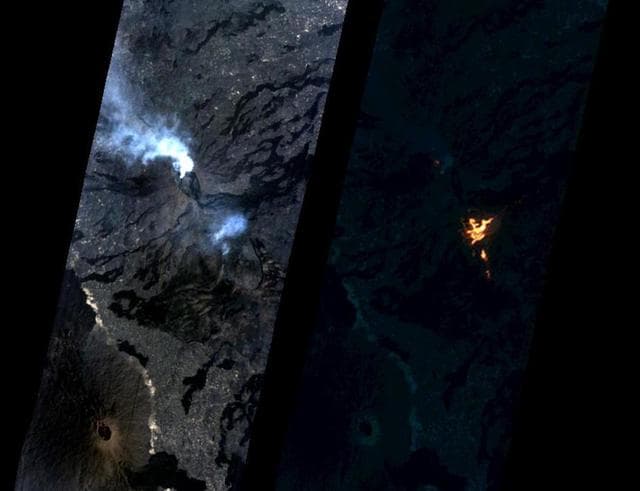
The satellite was tiny, the size of a small refrigerator, only supposed to last one year and constructed and operated on a shoestring budget — yet it persisted for a total of 17 years on orbit. On March 30, 2017, the satellite was powered off due to a lack of fuel, and will slowly spiral down to Earth. It is expected to burn up in the atmosphere in 2056. “The Earth Observing-1 satellite is like ‘The Little Engine That Could’,” said Betsy Middleton, project scientist for the satellite at NASA’s Goddard Space Flight Center in Greenbelt, Maryland. With more than 1,500 research papers generated and 180,000 images captured, the Earth Observing-1 (EO-1) satellite has exceeded expectations in both its technology and research goals, as well as longevity.
Most NASA images are in the public domain and free to use. Credit NASA as the source. Check NASA's media usage guidelines for details. Images featuring identifiable individuals may require additional permissions.
NASA ID
GSFC_20170330_EO1_m12559_Decommission
Date Created
March 30, 2017
Center
GSFC
Media Type
video
Location
Goddard Space Flight Center
Download this video in multiple resolutions. All NASA media are free for public use.
Captions
Subtitles