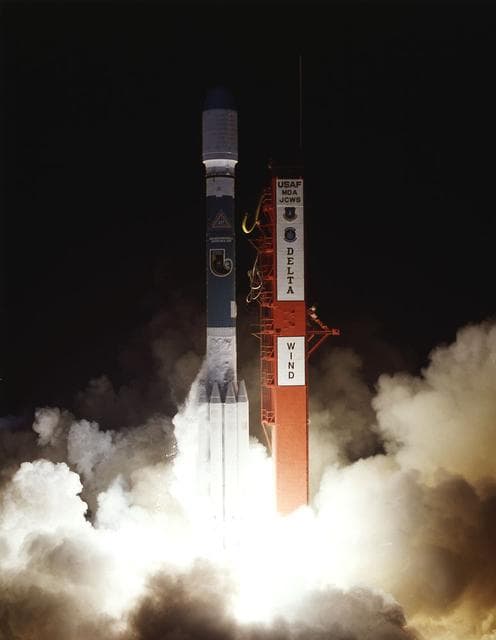
In late June 2013, the Interface Region Imaging Spectrograph, or IRIS, will launch from Vandenberg Air Force Base, Calif. IRIS will tease out the rules governing the lowest layers of the solar atmosphere — historically some of the hardest to untangle. Known as the solar interface region, this is one of the most complex areas in the sun's atmosphere: all the energy that drives solar activity travels through it. The interface region lies between the sun’s 6,000-degree, white-hot, visible surface, the photosphere, and the much hotter multi-million-degree upper corona. Interactions between the violently moving plasma and the sun’s magnetic field in this area may well be the source of the energy that heats the corona to its million-degree temperatures, some hundreds and occasionally thousands of times hotter than the sun's surface. The chromosphere is also considered a candidate as the origin for giant explosions on the sun such as solar flares and coronal mass ejections. IRIS will use high-resolution images, data and advanced computer models to unravel how solar gases move, gather energy and heat up through the lower solar atmosphere. Outfitted with state-of-the-art tools, IRIS will be able to tease apart what's happening in the solar interface region better than ever before.
Most NASA images are in the public domain and free to use. Credit NASA as the source. Check NASA's media usage guidelines for details. Images featuring identifiable individuals may require additional permissions.
NASA ID
GSFC_2013_IRIS_m11256_Mission_Trailer
Date Created
June 19, 2013
Center
GSFC
Media Type
video
Photographer
Robert Andreoli, John Caldwell
Location
Goddard Space Flight Center
Download this video in multiple resolutions. All NASA media are free for public use.
Captions
Subtitles