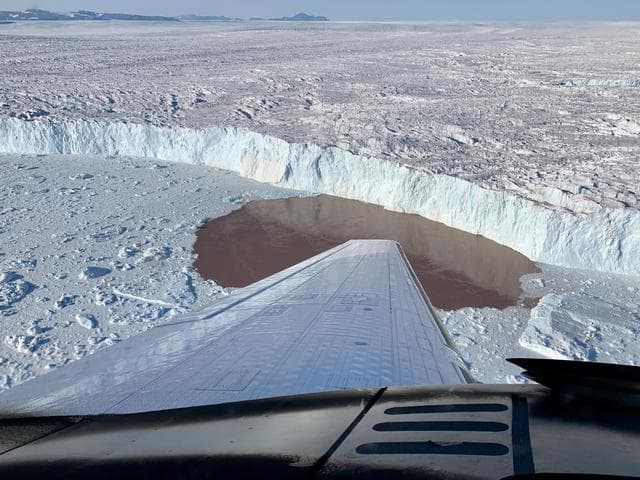
Nearly every spring since 1991, researchers including William Krabill of NASA's Wallops Flight Facility in Wallops Island, Va., have flown on a NASA aircraft over Greenland, collecting measurements of ice thickness from an altitude of about 2,000 feet. Now, on March 30, Krabill and colleagures return to collect updated measurements. This time, however, the mission is set to be more extensive than ever before, and takes place with new urgency. Radars and lasers new to the Greenland flights will be tested and calibrated with meaturements currently made from the Ice, Cloud, and land Elevation Satellite (ICESat). Launched in January 2003, ICESat is already more than six years beyond its three-year design lifetime and should it come to an end, the NASA aircraft will be ready to bridge the gap until the launch of ICESat-II, planned for launch no earlier than 2014.
Most NASA images are in the public domain and free to use. Credit NASA as the source. Check NASA's media usage guidelines for details. Images featuring identifiable individuals may require additional permissions.
NASA ID
GSFC_20090402_Ice_Bridge_m10414_Wallops
Date Created
April 2, 2009
Center
GSFC
Media Type
video
Photographer
Jefferson Beck
Location
Goddard Space Flight Center
Download this video in multiple resolutions. All NASA media are free for public use.
Captions
Subtitles