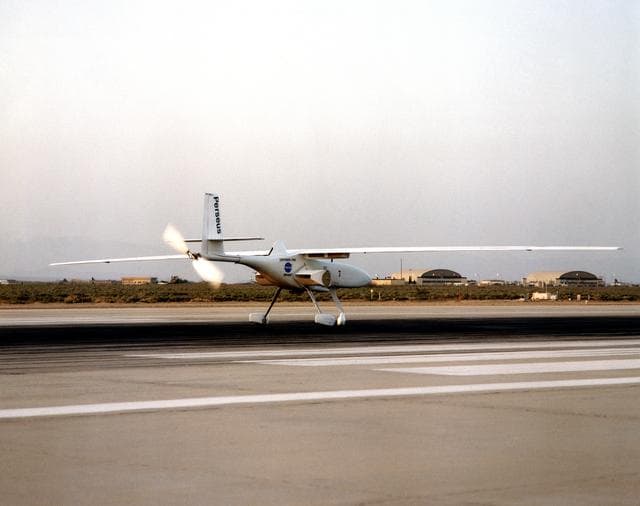
Perseus A on Ramp
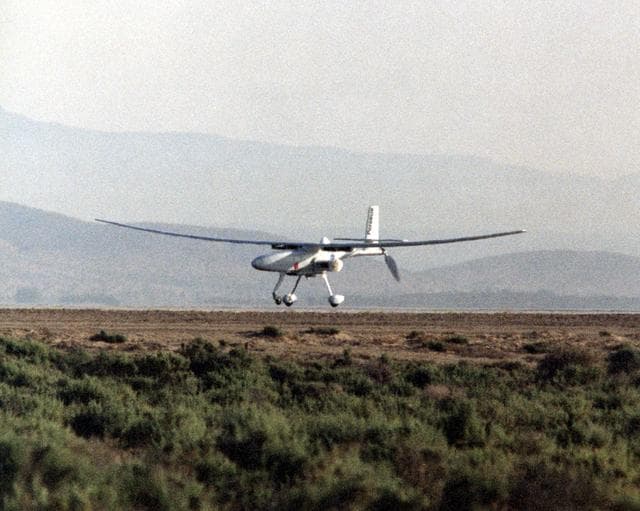
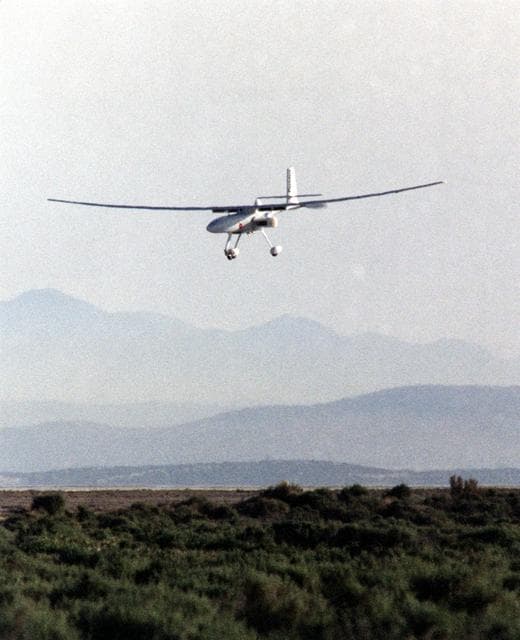
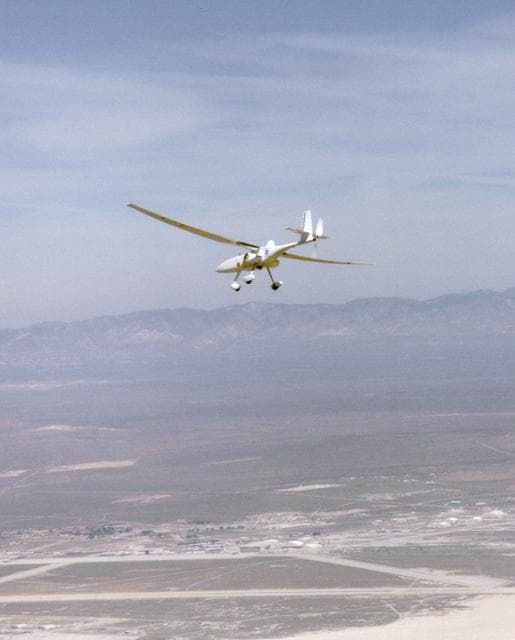
The Perseus A, a remotely-piloted, high-altitude research vehicle, is seen just after landing on Rogers Dry Lake at the Dryden Flight Research Center, Edwards, California. The Perseus A had a unique method of takeoff and landing. To make the aircraft as aerodynamic and lightweight as possible, designers gave it only two very small centerline wheels for landing. These wheels were very close to the fuselage, and therefore produced very little drag. However, since the fuselage sat so close to the ground, it was necessary to keep the large propeller at the rear of the aircraft locked in a horizontal position during takeoff. The aircraft was towed to about 700 feet in the air, where the engine was started and the aircraft began flying under its own power.
Usage Rights
Most NASA images are in the public domain and free to use. Credit NASA as the source. Check NASA's media usage guidelines for details. Images featuring identifiable individuals may require additional permissions.
Keywords
Details
NASA ID
EC94-42742-4
Date Created
August 15, 1994
Center
AFRC
Media Type
image
Photographer
NASA
Location
AFRC
Downloads
Download this image in multiple resolutions. All NASA media are free for public use.