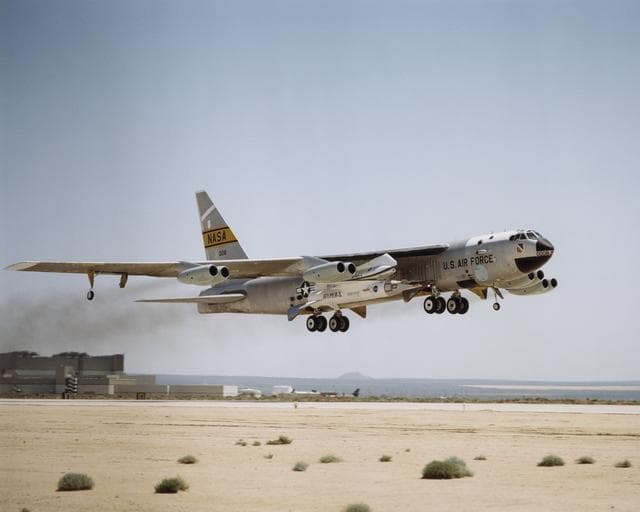
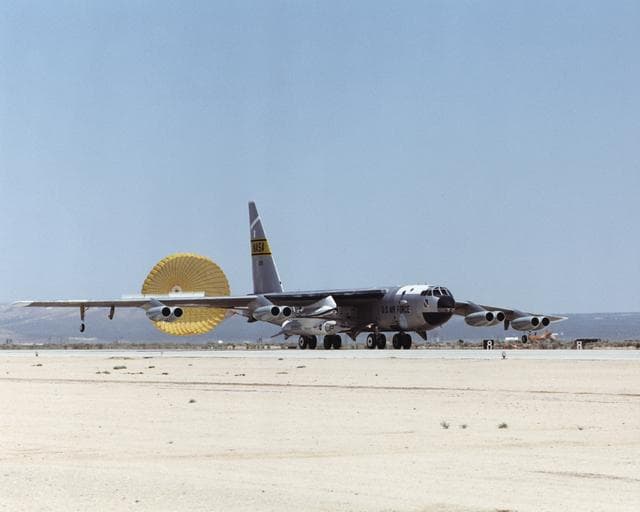
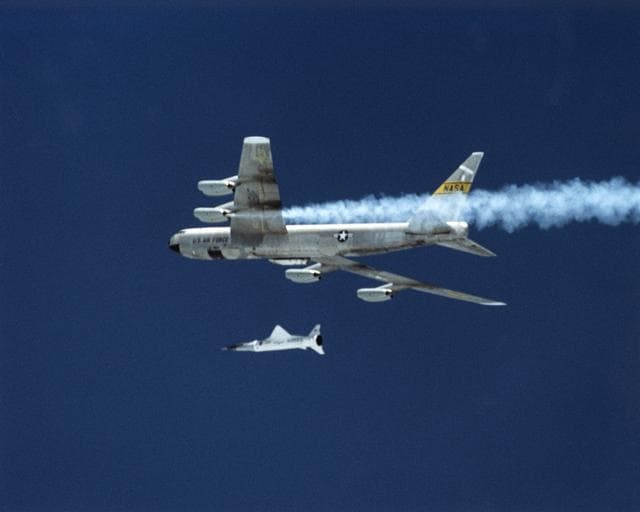
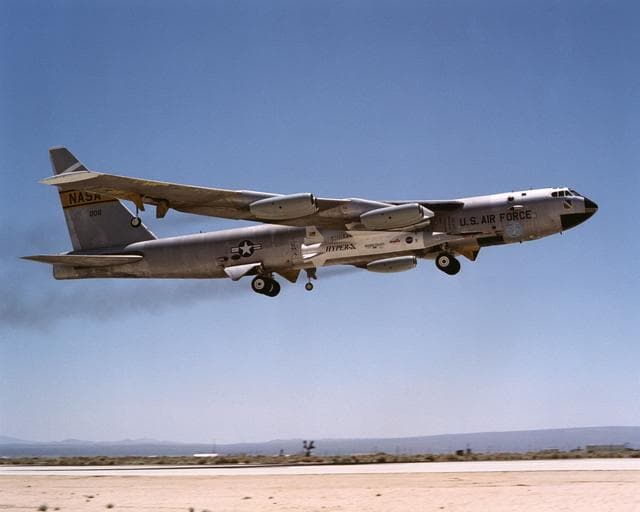
The X-43A/Pegasus combination dropped into the Pacific Ocean after losing control early in the first free-flight attempt
The first X-43A hypersonic research aircraft and its modified Pegasus booster rocket were carried aloft by NASA's NB-52B carrier aircraft from Dryden Flight Research Center at Edwards Air Force Base, Calif., on June 2, 2001 for the first of three high-speed free flight attempts. About an hour and 15 minutes later the Pegasus booster was released from the B-52 to accelerate the X-43A to its intended speed of Mach 7. Before this could be achieved, the combined Pegasus and X-43A "stack" lost control about eight seconds after ignition of the Pegasus rocket motor. The mission was terminated and explosive charges ensured the Pegasus and X-43A fell into the Pacific Ocean in a cleared Navy range area. A NASA investigation board is being assembled to determine the cause of the incident. Work continues on two other X-43A vehicles, the first of which could fly by late 2001. Central to the X-43A program is its integration of an air-breathing "scramjet" engine that could enable a variety of high-speed aerospace craft, and promote cost-effective access to space. The 12-foot, unpiloted research vehicle was developed and built for NASA by MicroCraft Inc., Tullahoma, Tenn. The booster was built by Orbital Sciences Corp. at Chandler, Ariz.
Usage Rights
Most NASA images are in the public domain and free to use. Credit NASA as the source. Check NASA's media usage guidelines for details. Images featuring identifiable individuals may require additional permissions.
Keywords
Details
NASA ID
EC01-0182-11
Date Created
June 2, 2001
Center
AFRC
Media Type
image
Photographer
NASA/Jim Ross
Location
AFRC
Downloads
Download this image in multiple resolutions. All NASA media are free for public use.