During this event, students from the Caribbean and Central America had the opportunity to speak with Astronaut Josh Cassada to learn about natural disaster research and monitoring, as seen from the unique perspective of the International Space Station. More than 400 questions were submitted by schools in the region. The selected questions were related to climate change and monitoring hazard events such as hurricanes, volcanic eruptions, tsunamis, and coastal erosion. Learn more about the Amateur Radio on the International Space Station (ARISS) program at https://www.ariss.org/. This event is part of the Disaster Fighters campaign, an initiative sponsored by the World Bank, GFDRR, United Nations Office for Disaster Risk Reduction, CDEMA, CEPREDENAC, PACIFICO, and NASA Disasters Program, among other organizations. The campaign and video were produced by the team at Pacifico Risk Communications: Emiliano Rodriguez Nuesch, Malena Albertoni, Alejo Santos, Nancy Núñez, Rodrigo Gonzalez Alvarado and Diego Voloschin. The contact was made possible by the IK1SLD ARISS HamTV Telebridge Ground Station located in Casale Monferrato, Italy.
Most NASA images are in the public domain and free to use. Credit NASA as the source. Check NASA's media usage guidelines for details. Images featuring identifiable individuals may require additional permissions.
NASA ID
ARISS_ST_LUCIA_8-MINS-v2
Date Created
March 7, 2023
Center
JSC
Media Type
video
Download this video in multiple resolutions. All NASA media are free for public use.
Captions
Subtitles
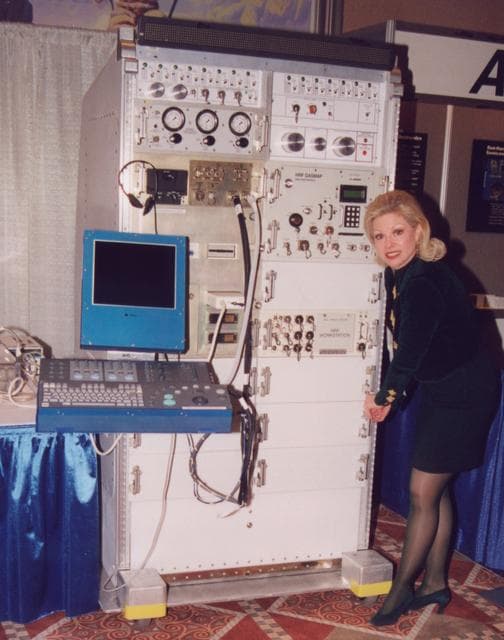
Microgravity
Jan 31, 2000
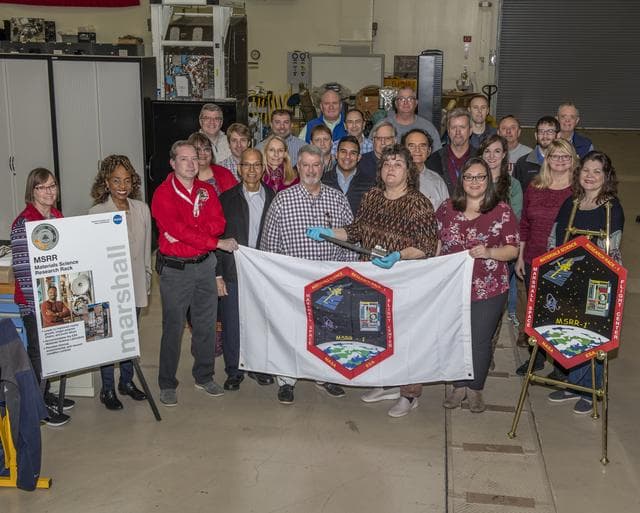
Sample Cartridge Assembly (SCA) Project Group Photograph
Jan 30, 2020
Advanced Combustion via Microgravity Experiments, ACME chamber insert
Jun 22, 2016
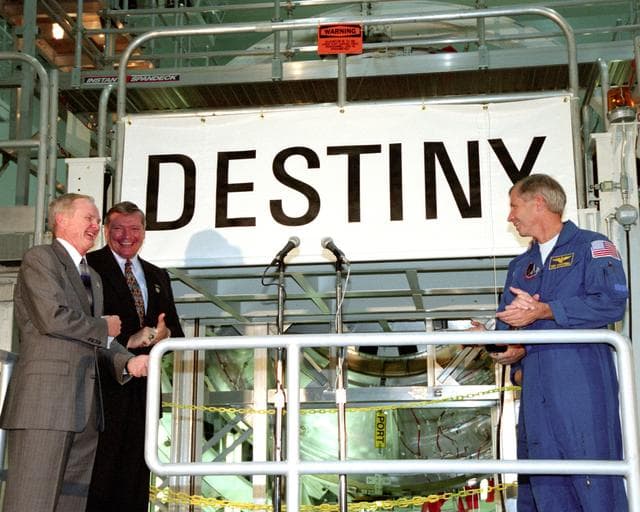
KENNEDY SPACE CENTER, FLA. - In the Space Station Processing Facility, Center Director Roy Bridges (left), Program Manager of the International Space Station (ISS) Randy Brinkley (second from left) and STS-98 Commander Ken Cockrell (right) applaud the unveiling of the name "Destiny" for the U.S. Laboratory module. The lab, which is behnd them on a workstand, is scheduled to be launched on STS-98 on Space Shuttle Endeavour in early 2000. It will become the centerpiece of scientific research on the ISS. The Shuttle will spend six days docked to the Station while the laboratory is attached and three spacewalks are conducted to compete its assembly. The laboratory will be launched with five equipment racks aboard, which will provide essential functions for Station systems, including high data-rate communications, and maintain the Station's orientation using control gyroscopes launched earlier. Additional equipment and research racks will be installed in the laboratory on subsequent Shuttle flights.
Dec 1, 1998