ARC-1989-A89-7007
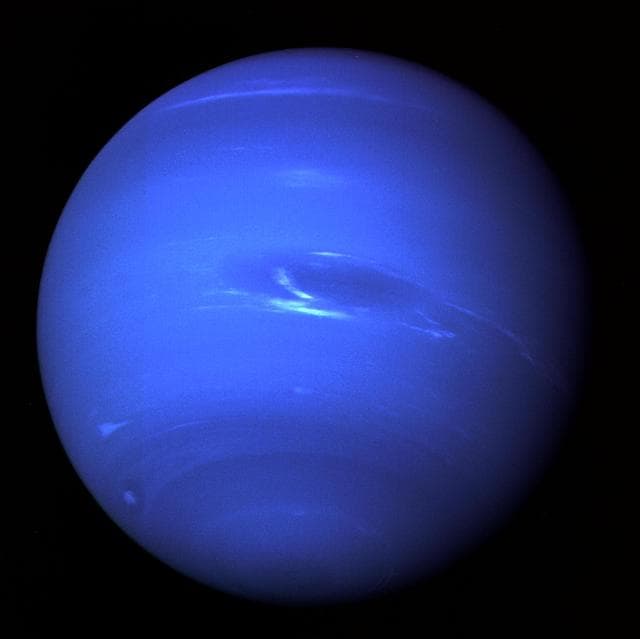
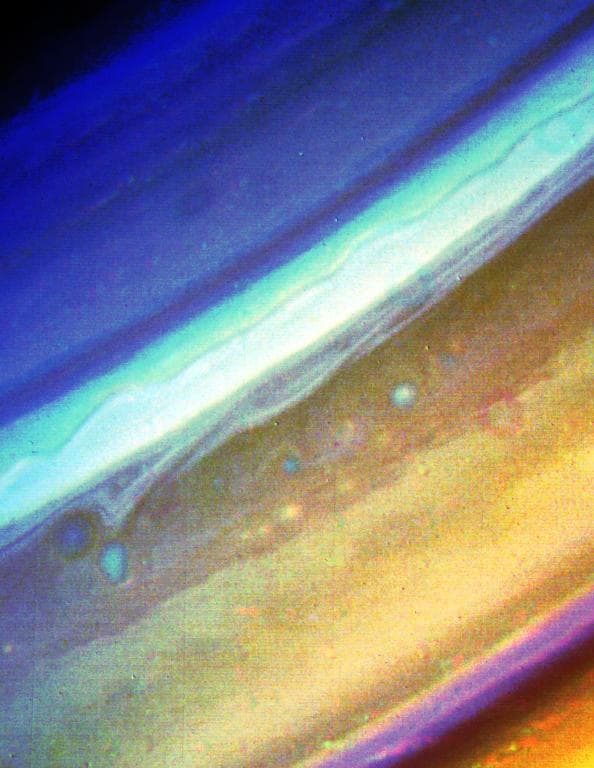
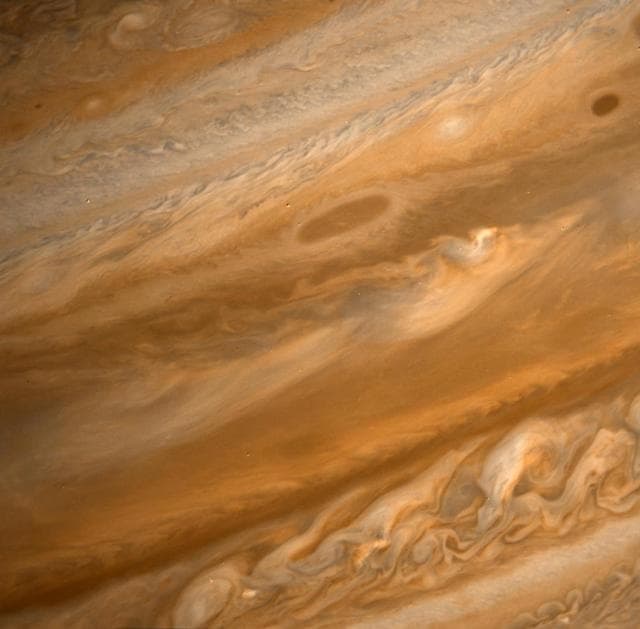
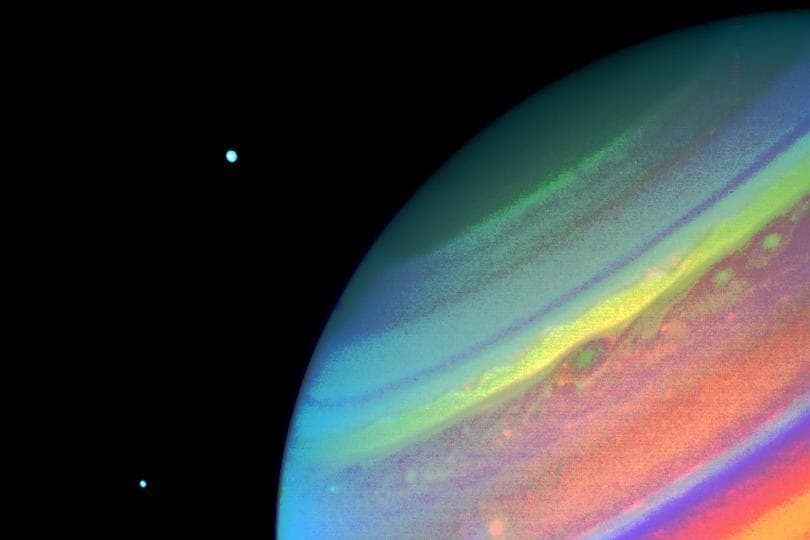
The bright cirrus-like clouds of Neptune change rapidly, often forming and dissipation over periods of several to tens of hours. In this sequence spanning two rotations of Neptune (about 36 hours) Voyager 2 observed cloud evolution in the region around the Great Dark Spot (GDS) at an effective resolution of about 100 km (62 miles) per pixel. The surprisingly rapid changes which occur over the 18 hours separating each panel shows that in this region Neptune's weather is perhaps as dynamic and variable as that of the Earth. However, the scale is immense by our standards--the Earth and the GDS are of similar size -- and in Neptune's frigid atmosphere, where temperatures are as low as 55 degree Kelvin (-360F), the cirrus clouds are composed of frozen methane rather than Earth's crystalse of water ice.
Usage Rights
Most NASA images are in the public domain and free to use. Credit NASA as the source. Check NASA's media usage guidelines for details. Images featuring identifiable individuals may require additional permissions.
Keywords
Details
NASA ID
ARC-1989-A89-7007
Date Created
August 21, 1989
Center
ARC
Media Type
image
Photographer
JPL
Downloads
Download this image in multiple resolutions. All NASA media are free for public use.