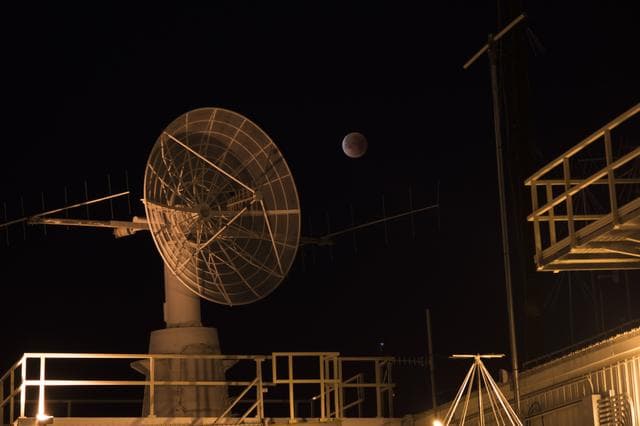
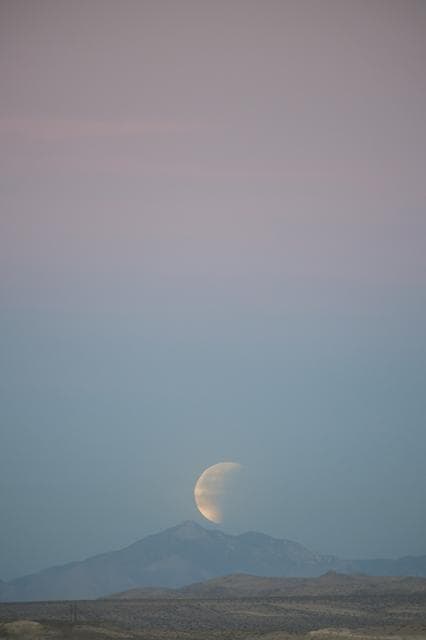
Image shows Trona Pinnacles near California's NASA Armstrong Flight Research Center during Jan. 31 Super Blue Blood Moon. Trona Pinnacles is an unusual geological feature of the state's Desert National Conservation.
NASA Armstrong Flight Research Center photographer Lauren Hughes takes photos of the Super Blue Blood Moon eclipse from California's Trona Pinnacles Desert National Conservation for the Jan. 31 of the total lunar eclipse that provided a rare opportunity to capture a supermoon, a blue moon and a lunar eclipse at the same time. A supermoon occurs when the Moon is closer to Earth in its orbit and appearing 14 percent brighter than usual. As the second full moon of the month, this moon is also commonly known as a blue moon, though it will not be blue in appearance. The super blue moon passed through Earth's shadow and took on a reddish tint, known as a blood moon. This total lunar eclipse occurs when the Sun, Earth, and a full moon form a near-perfect lineup in space. The Moon passes directly behind the Earth into its umbra (shadow).
Usage Rights
Most NASA images are in the public domain and free to use. Credit NASA as the source. Check NASA's media usage guidelines for details. Images featuring identifiable individuals may require additional permissions.
Keywords
Details
NASA ID
AFRC2018-0020-07
Date Created
January 31, 2017
Center
AFRC
Media Type
image
Photographer
NASA/Lauren Hughes
Location
AFRC
Downloads
Download this image in multiple resolutions. All NASA media are free for public use.