Spacelab
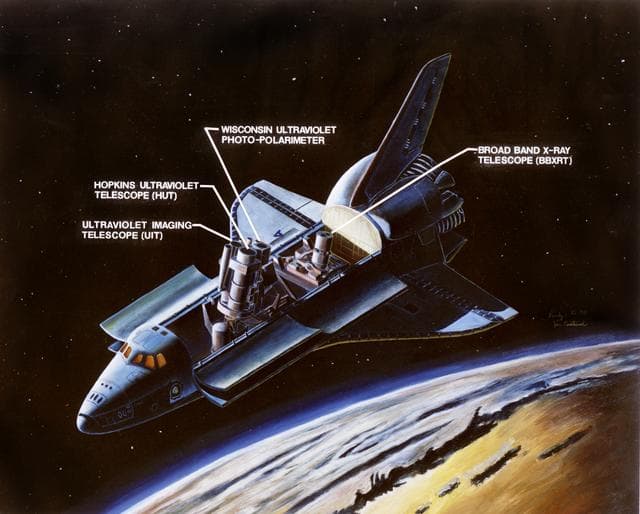
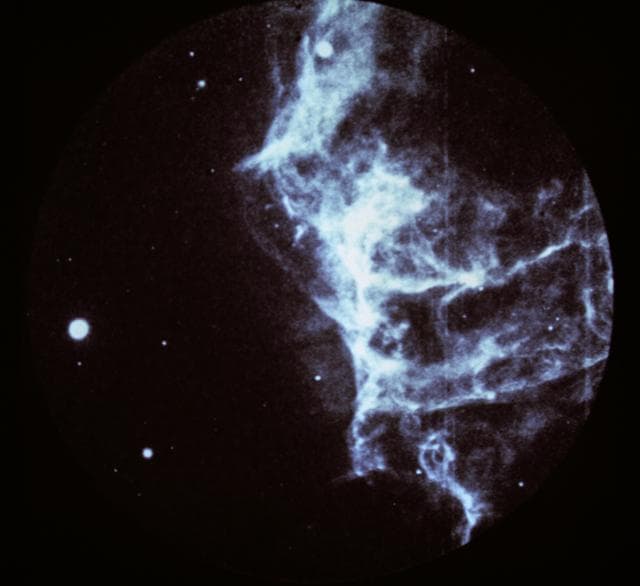
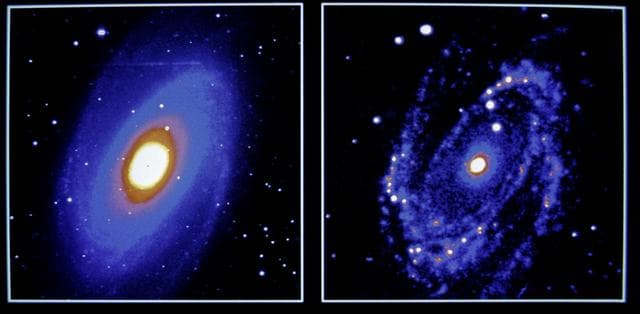
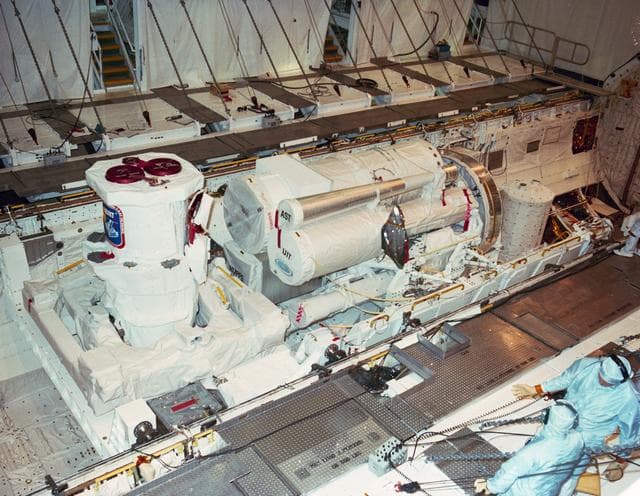
In this photograph, the instruments of the Astro-1 Observatory are erected in the cargo bay of the Columbia orbiter. Astro-1 was launched aboard the the Space Shuttle Orbiter Columbia (STS-35) mission on December 2, 1990. The Astro Observatory was designed to explore the universe by observing and measuring the ultraviolet radiation from celestial objects. Astronomical targets of observation selected for Astro missions included planets, stars, star clusters, galaxies, clusters of galaxies, quasars, remnants of exploded stars (supernovae), clouds of gas and dust (nebulae), and the interstellar medium. Astro-1 used a Spacelab pallet system with an instrument pointing system and a cruciform structure for bearing the three ultraviolet instruments mounted in a parallel configuration. The three instruments were:The Hopkins Ultraviolet Telescope (HUT), the Wisconsin Ultraviolet Photo-Polarimeter Experiment (WUPPE), and the Ultraviolet Imaging Telescope (UIT). Also in the payload bay was the Broad Band X-Ray Telescope (BBXRT). Scientific return included approximately 1,000 photographs of the ultraviolet sky in the most extensive ultraviolet imagery ever attempted, the longest ultraviolet spectral observation of a comet ever made, and data never before seen on types of active galaxies called Seyfert galaxies. The mission also provided data on a massive supergiant star captured in outburst and confirmed that a spectral feature observed in the interstellar medium was due to graphite. In addition, Astro-1 acquired superb observations of the Jupiter magnetic interaction with one of its satellites.
Usage Rights
Most NASA images are in the public domain and free to use. Credit NASA as the source. Check NASA's media usage guidelines for details. Images featuring identifiable individuals may require additional permissions.
Keywords
Details
NASA ID
9128663
Date Created
December 1, 1990
Center
MSFC
Media Type
image
Downloads
Download this image in multiple resolutions. All NASA media are free for public use.