Spacelab
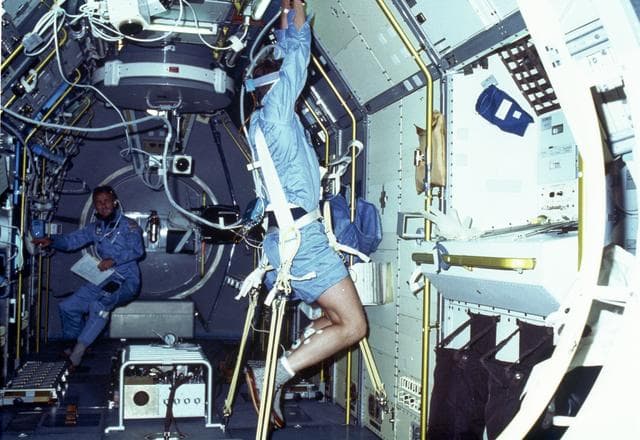
In this Spacelab-1 mission onboard photograph, astronaut Byron Lichtenberg performs a drop experiment, one of the Vestibular Experiments in Space investigations. The experiment examined spinal reflexes to determine whether they changed in microgravity. In Earth's environment, the otoliths signal the muscles to prepare for jolts associated with falling. During the flight, the normal reflex between the otoliths and the muscles was partially inhibited early in flight, declined further as the flight progressed, and returned to normal immediately after landing, suggesting that the brain ignored or reinterpreted otolith signals during space flight. Crewmembers reported a lack of awareness of position and location of feet, difficulty in maintaining balance, and a perception that falls were more sudden, faster, and harder than similar drops experienced in preflight. Crewmembers experienced illusions as they performed prescribed movement tests. When crew members viewed various targets and then pointed at them while blindfolded, their perception of target location and position of their own limbs was inaccurate in flight compared with similar tests on the ground. The Spacelab-1 was a multidisciplinary mission; that is, investigations were performed in several different fields of scientific research. The overall goal of the mission was to verify Spacelab performance through a variety of scientific experiments. The Spacelab-1 was launched aboard the Space Shuttle Orbiter Columbia for the STS-9 mission on November 28, 1983. The Marshall Space Flight Center had management responsibilities for the mission.
Usage Rights
Most NASA images are in the public domain and free to use. Credit NASA as the source. Check NASA's media usage guidelines for details. Images featuring identifiable individuals may require additional permissions.
Details
NASA ID
8440350
Date Created
November 1, 1983
Center
MSFC
Media Type
image