Around Marshall
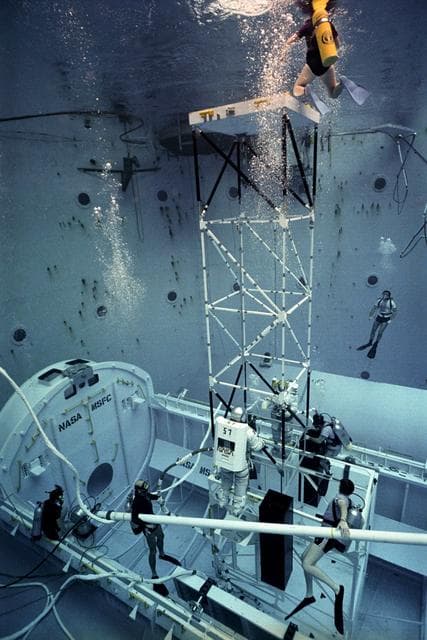
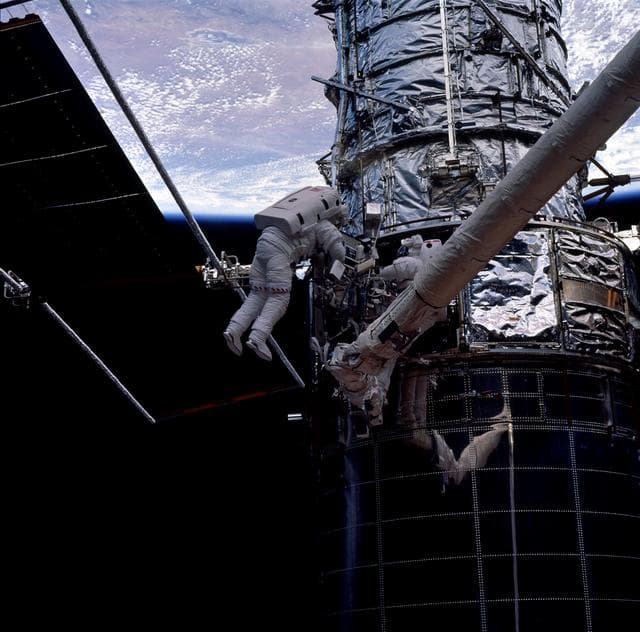
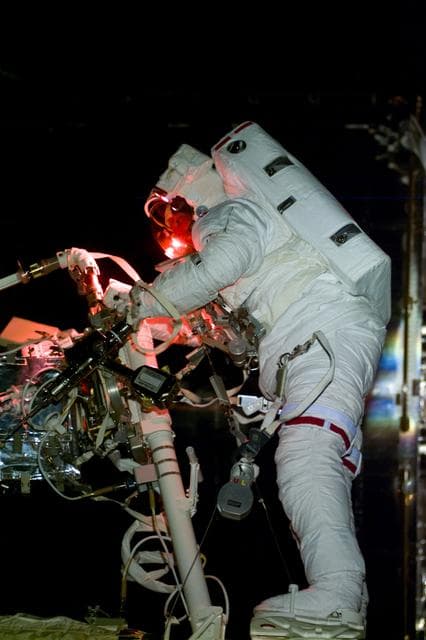
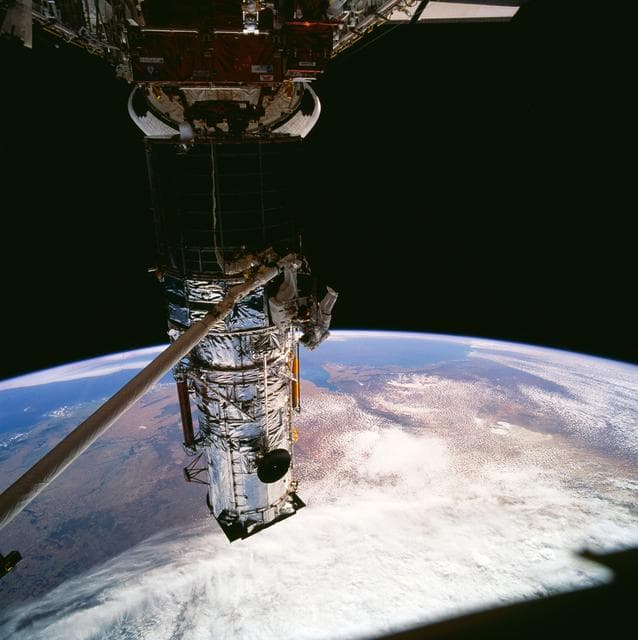
One of the main components of the Hubble Space Telescope (HST) is the Solar Array Drive Electronics (SADE) system. This system interfaces with the Support System Module (SSM) for exchange of operational commands and telemetry data. SADE operates and controls the Solar Array Drive Mechanisms (SADM) for the orientation of the Solar Array Drive (SAD). It also monitors the position of the arrays and the temperature of the SADM. During the first HST servicing mission, the astronauts replaced the SADE component because of some malfunctions. This turned out to be a very challenging extravehicular activity (EVA). Two transistors and two diodes had been thermally stressed with the conformal coating discolored and charred. Soldered cornections became molten and reflowed between the two diodes. The failed transistors gave no indication of defective construction. All repairs were made and the HST was redeposited into orbit. Prior to undertaking this challenging mission, the orbiter's crew trained at Marshall Space Flight Center's (MSFC) Neutral Buoyancy Simulator (NBS) to prepare themselves for working in a low gravity environment. They also practiced replacing HST parts and exercised maneuverability and equipment handling. Pictured are crew members practicing on a space platform.
Usage Rights
Most NASA images are in the public domain and free to use. Credit NASA as the source. Check NASA's media usage guidelines for details. Images featuring identifiable individuals may require additional permissions.
Details
NASA ID
8337893
Date Created
August 10, 1983
Center
MSFC
Media Type
image
Downloads
Download this image in multiple resolutions. All NASA media are free for public use.