Spacelab
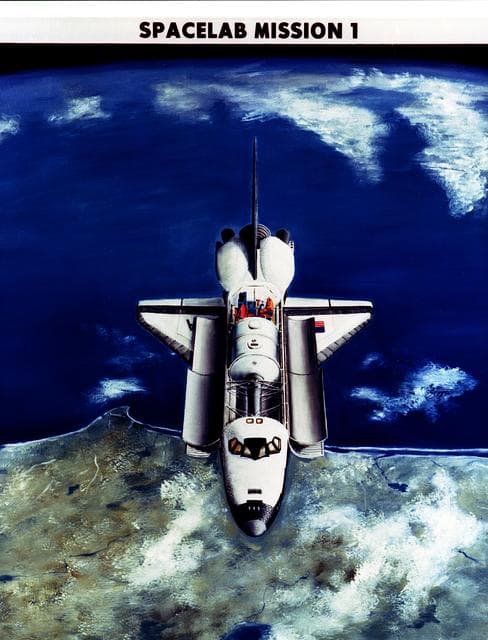
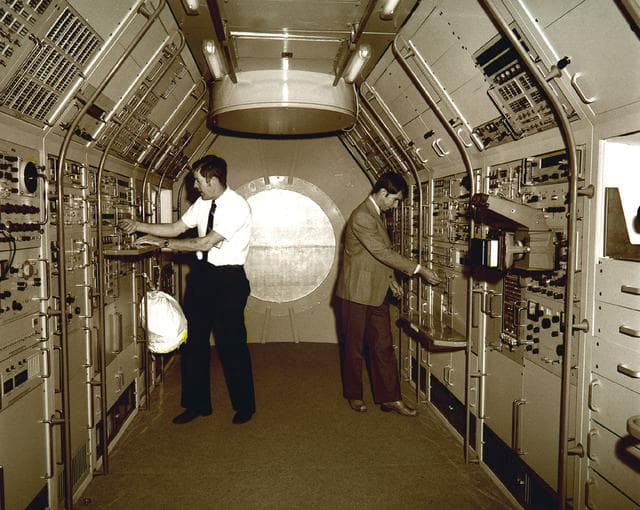
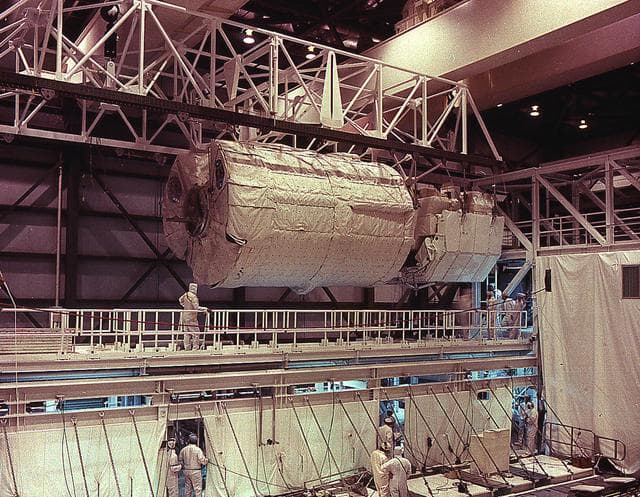
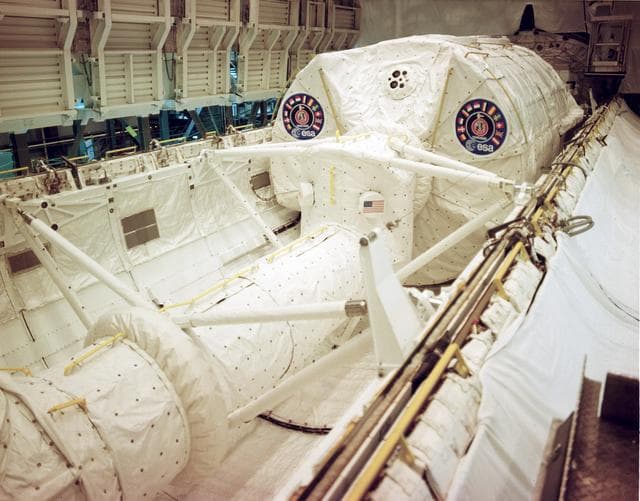
Spacelab was a versatile laboratory carried in the Space Shuttle's cargo bay for special research flights. Its various elements could be combined to accommodate the many types of scientific research that could best be performed in space. Spacelab consisted of an enclosed, pressurized laboratory module and open U-shaped pallets located at the rear of the laboratory module. The laboratory module contained utilities, computers, work benches, and instrument racks to conduct scientific experiments in astronomy, physics, chemistry, biology, medicine, and engineering. Equipment, such as telescopes, anternas, and sensors, was mounted on pallets for direct exposure to space. A 1-meter (3.3-ft.) diameter aluminum tunnel, resembling a z-shaped tube, connected the crew compartment (mid deck) to the module. The reusable Spacelab allowed scientists to bring experiment samples back to Earth for post-flight analysis. Spacelab was a cooperative venture of the European Space Agency (ESA) and NASA. ESA was responsible for funding, developing, and building of Spacelab, while NASA was responsible for the launch and operational use of Spacelab. Spacelab missions were cooperative efforts between scientists and engineers from around the world. Teams from NASA centers, universities, private industry, government agencies and international space organizations designed the experiments. The Marshall Space Flight Center was NASA's lead center for monitoring the development of Spacelab and managing the program.
Usage Rights
Most NASA images are in the public domain and free to use. Credit NASA as the source. Check NASA's media usage guidelines for details. Images featuring identifiable individuals may require additional permissions.
Keywords
Details
NASA ID
8109364
Date Created
January 1, 1981
Center
MSFC
Media Type
image
Downloads
Download this image in multiple resolutions. All NASA media are free for public use.