Around Marshall
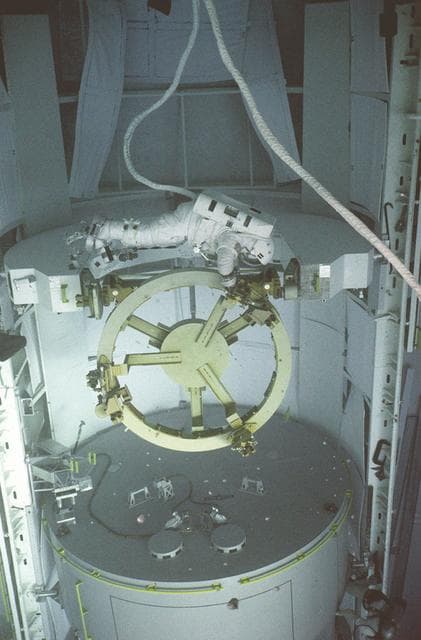
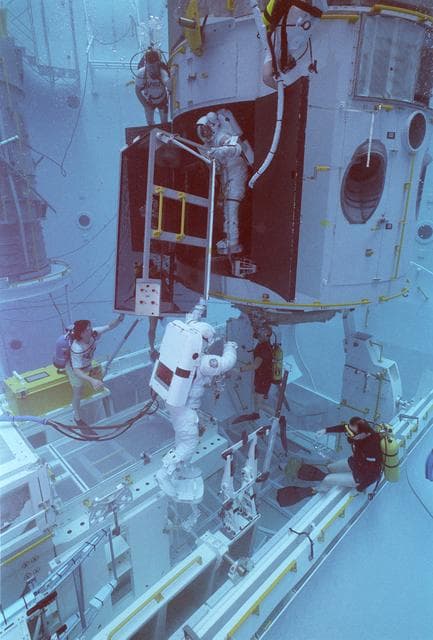
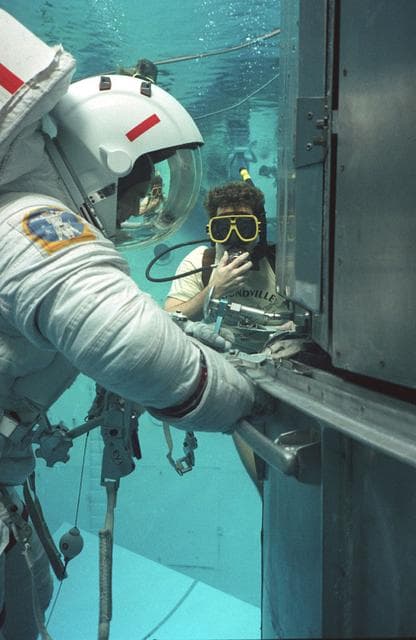
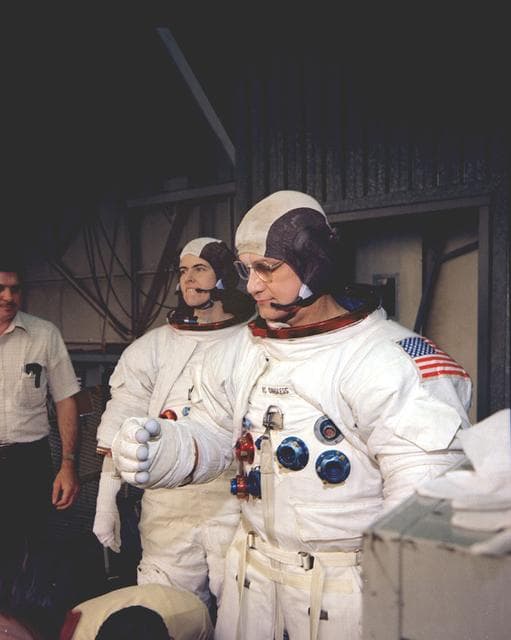
The Hubble Space Telescope (HST) is a cooperative program of the European Space Agency (ESA) and the National Aeronautical and Space Administration (NASA) to operate a long-lived space-based observatory. It was the first and flagship mission of NASA's Great Observatories program. The HST program began as an astronomical dream in the 1940s. During the1970s and 1980s, the HST was finally designed and built becoming operational in the 1990s. The HST was deployed into a low-Earth orbit on April 25, 1990 from the cargo bay of the Space Shuttle Discovery (STS-31). The design of the HST took into consideration its length of service and the necessity of repairs and equipment replacement by making the body modular. In doing so, subsequent shuttle missions could recover the HST, replace faulty or obsolete parts and be re-released. Pictured is MSFC's Neutral Buoyancy Simulator that served as the test center for shuttle astronauts training for Hubble related missions. Shown is an astronaut training on a mock-up of a modular section of the HST in the removal and replacement of scientific instruments.
Usage Rights
Most NASA images are in the public domain and free to use. Credit NASA as the source. Check NASA's media usage guidelines for details. Images featuring identifiable individuals may require additional permissions.
Details
NASA ID
7998091
Date Created
August 13, 1979
Center
MSFC
Media Type
image
Downloads
Download this image in multiple resolutions. All NASA media are free for public use.