International Space Station (ISS)
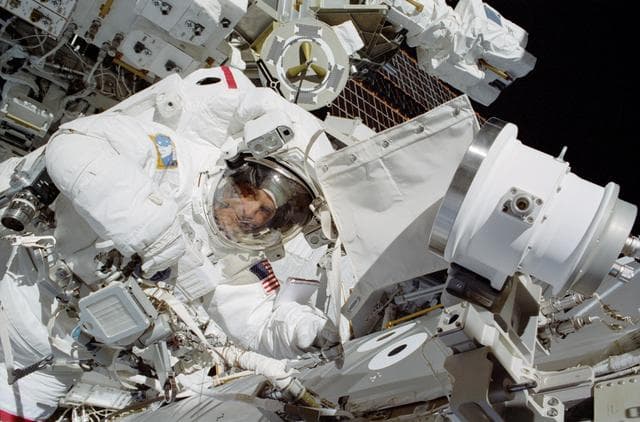
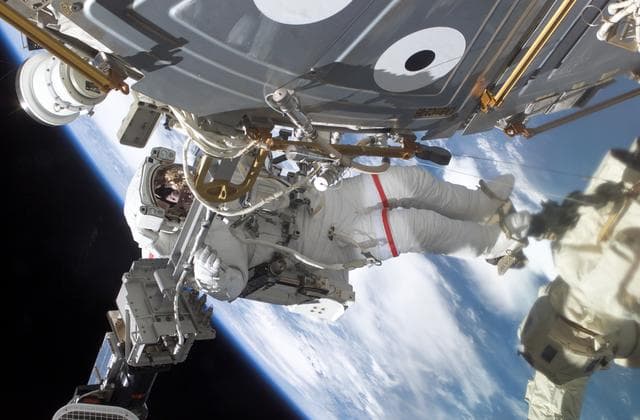
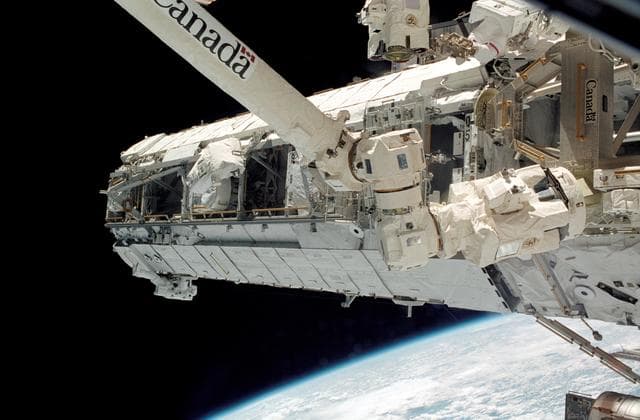
Anchored to a foot restraint on the Space Station Remote Manipulator System (SSRMS) or Canadarm2, astronaut David A. Wolf, STS-112 mission specialist, participates in the mission's first session of extravehicular activity (EVA). Wolf is carrying the Starboard One (S1) outboard nadir external camera which was installed on the end of the S1 Truss on the International Space Station (ISS). Launched October 7, 2002 aboard the Space Shuttle Orbiter Atlantis, the STS-112 mission lasted 11 days and performed three EVAs. Its primary mission was to install the S1 Integrated Truss Structure and Equipment Translation Aid (CETA) Cart to the ISS. The S1 truss provides structural support for the orbiting research facility's radiator panels, which use ammonia to cool the Station's complex power system. The S1 truss, attached to the S0 (S Zero) truss installed by the previous STS-110 mission, flows 637 pounds of anhydrous ammonia through three heat rejection radiators. The truss is 45-feet long, 15-feet wide, 10-feet tall, and weighs approximately 32,000 pounds. The CETA is the first of two human-powered carts that will ride along the International Space Station's railway providing a mobile work platform for future extravehicular activities by astronauts.
Usage Rights
Most NASA images are in the public domain and free to use. Credit NASA as the source. Check NASA's media usage guidelines for details. Images featuring identifiable individuals may require additional permissions.
Details
NASA ID
0302381
Date Created
October 10, 2002
Center
MSFC
Media Type
image
Downloads
Download this image in multiple resolutions. All NASA media are free for public use.