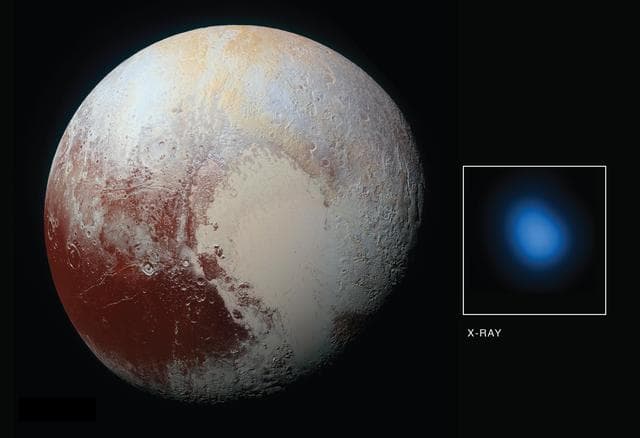
History of Chandra X-Ray Observatory
Giving scientists their first look, Chandra observed x-rays produced by fluorescent radiation from oxygen atoms of the Sun in the sparse upper atmosphere of Mars, about 120 kilometers (75 miles) above its surface. The x-ray power detected from the Martian atmosphere is very small, amounting to only 4 megawatts, comparable to the x-ray power of about ten thousand medical x-ray machines. At the time of the Chandra observation, a huge dust storm developed on Mars that covered about one hemisphere, later to cover the entire planet. This hemisphere rotated out of view over the 9-hour observation, but no change was observed in the x-ray intensity indicating that the dust storm did not affect the upper atmosphere. Scientists also observed a halo of x-rays extending out to 7,000 kilometers above the surface of Mars believed to be produced by collisions of ions racing away from the Sun (the solar wind).
Usage Rights
Most NASA images are in the public domain and free to use. Credit NASA as the source. Check NASA's media usage guidelines for details. Images featuring identifiable individuals may require additional permissions.
Details
NASA ID
0301104
Date Created
July 4, 2001
Center
MSFC
Media Type
image
Downloads
Download this image in multiple resolutions. All NASA media are free for public use.