Space Shuttle Projects
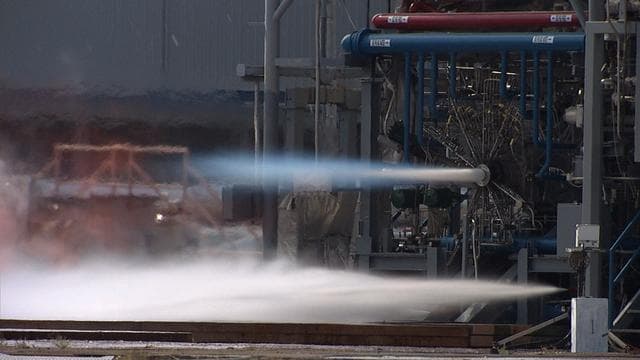
A scaled-down 24-inch version of the Space Shuttle's Reusable Solid Rocket Motor was successfully fired for 21 seconds at a Marshall Space Flight Center (MSFC) Test Stand. The motor was tested to ensure a replacement material called Lycocel would meet the criteria set by the Shuttle's Solid Motor Project Office. The current material is a heat-resistant, rayon-based, carbon-cloth phenolic used as an insulating material for the motor's nozzle. Lycocel, a brand name for Tencel, is a cousin to rayon and is an exceptionally strong fiber made of wood pulp produced by a special "solvent-spirning" process using a nontoxic solvent. It will also be impregnated with a phenolic resin. This new material is expected to perform better under the high temperatures experienced during launch. The next step will be to test the material on a 48-inch solid rocket motor. The test, which replicates launch conditions, is part of Shuttle's ongoing verification of components, materials, and manufacturing processes required by MSFC, which oversees the Reusable Solid Rocket Motor project. Manufactured by the ATK Thiokol Propulsion Division in Promontory, California, the Reusable Solid Rocket Motor measures 126 feet (38.4 meters) long and 12 feet (3.6 meters) in diameter. It is the largest solid rocket motor ever flown and the first designed for reuse. During its two-minute burn at liftoff, each motor generates an average thrust of 2.6 million pounds (1.2 million kilograms).
Usage Rights
Most NASA images are in the public domain and free to use. Credit NASA as the source. Check NASA's media usage guidelines for details. Images featuring identifiable individuals may require additional permissions.
Keywords
Details
NASA ID
0201934
Date Created
August 1, 2002
Center
MSFC
Media Type
image
Downloads
Download this image in multiple resolutions. All NASA media are free for public use.