Earth Science
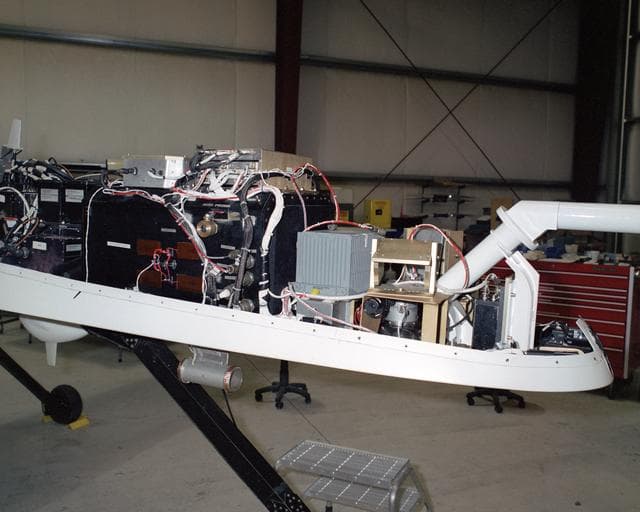
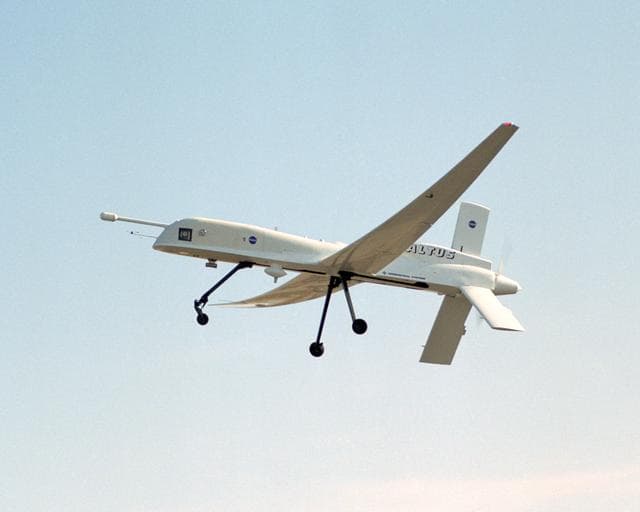
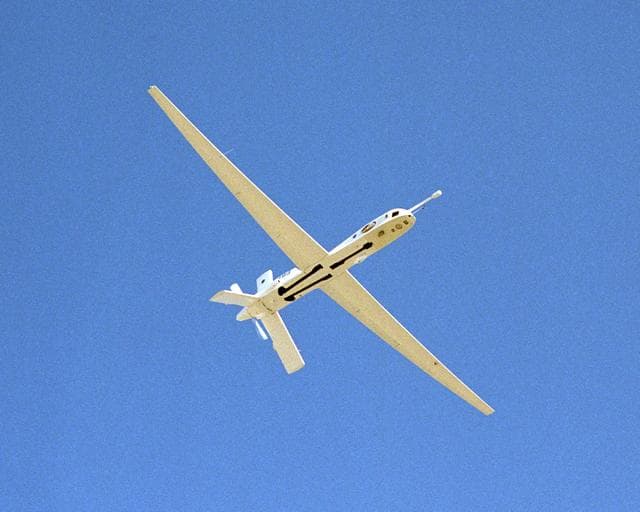
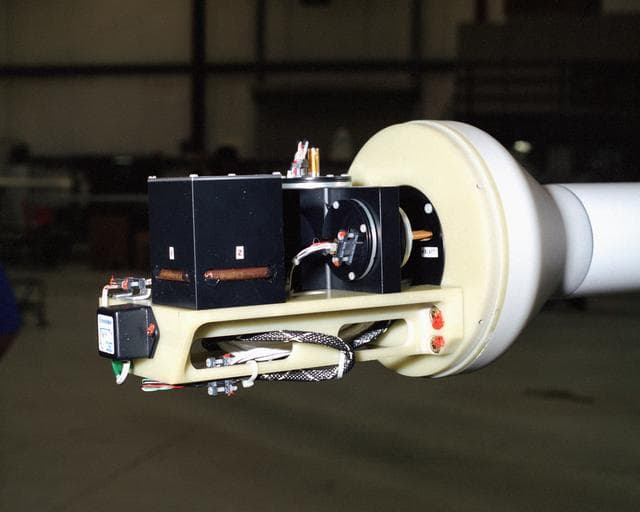
A NASA team studying the causes of electrical storms and their effects on our home planet achieved a milestone on August 21, 2002, completing the study's longest-duration research flight and monitoring four thunderstorms in succession. Radio news media can talk with Dr. Richard Blakeslee, the project's principal investigator, and Tony Kim, project manager at the Marshall Space Flight Center (MSFC), about their results and how their work will help improve future weather forecasting ability. Based at the Naval Air Station Key West, Florida, researchers with the Altus Cumulus Electrification Study (ACES) used the Altus II remotely- piloted aircraft to study a thunderstorm in the Atlantic Ocean off Key West, two storms at the western edge of the Everglades, and a large storm over the northwestern corner of the Everglades. This photograph shows Tony Kim And Dr. Richard Blakeslee of MSFC testing aircraft sensors that would be used to measure the electric fields produced by thunderstorm as part of NASA's ACES. With dual goals of gathering weather data safely and testing the adaptability of the uninhabited aircraft, the ACES study is a collaboration among the MSFC, the University of Alabama in Huntsville, NASA's Goddard Space Flight Center in Greenbelt, Maryland, Pernsylvania State University in University Park, and General Atomics Aeronautical Systems, Inc.
Usage Rights
Most NASA images are in the public domain and free to use. Credit NASA as the source. Check NASA's media usage guidelines for details. Images featuring identifiable individuals may require additional permissions.
Details
NASA ID
0102204
Date Created
January 1, 2001
Center
MSFC
Media Type
image
Downloads
Download this image in multiple resolutions. All NASA media are free for public use.