CosmosObservatory
Explore
Solar System
Live
Learn
Tools
About
Cosmos Observatory
ToolsAbout
Cosmos Observatory

Explore the universe through NASA data, real-time ISS tracking, Mars rover imagery, asteroid monitoring, and comprehensive space encyclopedia. Your gateway to the cosmos.

Explore

  • APOD
  • Mars Rovers
  • Earth Imagery
  • NASA Gallery
  • ISS Tracker

Data

  • Asteroids
  • Solar System
  • Exoplanets
  • Space Weather
  • Launches

Tools

  • Glossary
  • News
  • Calculators

Legal

  • About
  • Privacy Policy
  • Terms of Use
  • Space Tools
  • Contact

Stay updated with the cosmos

Get weekly digests of APOD highlights, upcoming launches, and space events.

© 2026 Cosmos Observatory. All rights reserved. Built with for space enthusiasts.

This website is not affiliated with, maintained, authorized, endorsed by, or in any way officially connected with NASA or any of its subsidiaries or affiliates. All NASA imagery is in the public domain unless otherwise noted. Data sourced from NASA Open APIs, Launch Library 2, and other open data services.

  1. Home
  2. APOD
  3. November 5, 2008
APOD

Seventeen Hundred Kilometers Above Enceladus

November 5, 2008
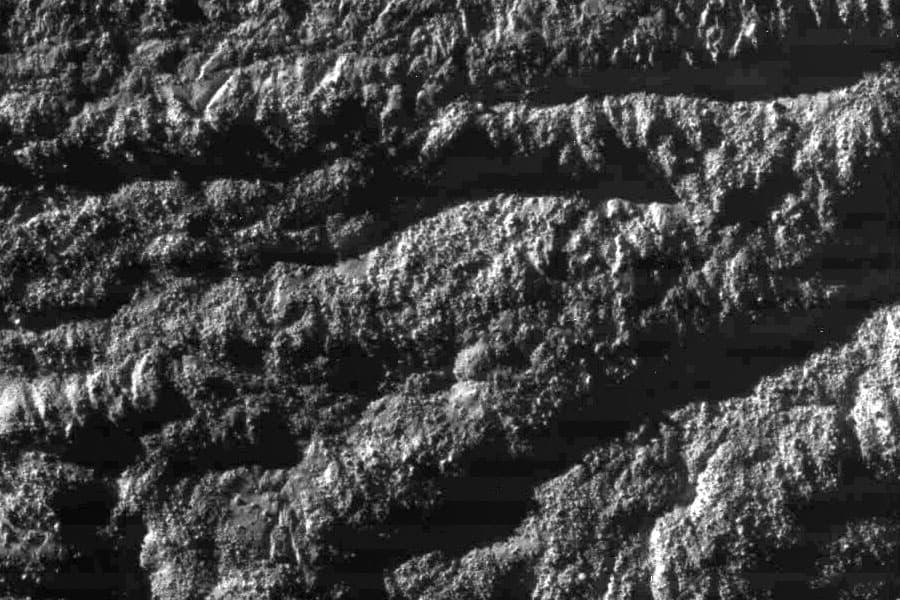
NASA APOD November 5, 2008: Seventeen Hundred Kilometers Above EnceladusFull Resolution
PreviousNovember 4, 2008
Today
NextNovember 6, 2008

About This Image

Above is one of the closest pictures yet obtained of Saturn's ice-spewing moon Enceladus. The image was taken from about 1,700 kilometers up as the robotic Cassini spacecraft zoomed by the fractured ice ball last week. Features the size of a bus are resolvable in this highly detailed image taken of Enceladus' active tiger stripe region. Very different from most other moons and planets, grooves and hills dot an alien moonscape devoid of craters. Space pioneers might wonder where, on such a highly textured surface, a future probe might land in search of freshly deposited ice, subsurface seas, or even indicators of life. Although appearing dark in the above contrast-enhanced image, the surface of Enceladus is covered with some of the brightest ice in the entire Solar System, reflecting about 99 percent of the light it receives. To help better understand this enigmatic world, Cassini is scheduled to swoop by Enceladus at least five more times.

Share

Full Archive

Browse by month since 1995

Mars Rover Photos

Curiosity & Perseverance

NASA Gallery

140,000+ space images

More From the Archive

APOD: A Partial Solar Eclipse over Texas - May 22, 2012

May 22, 2012

A Partial Solar Eclipse over Texas

APOD: Pluto at Night - June 9, 2016

June 9, 2016

Pluto at Night

APOD: Jupiter's Great X-Ray Spot - March 1, 2002

March 1, 2002

Jupiter's Great X-Ray Spot

Today's APOD

View the latest picture

Full Archive

Since June 16, 1995

Exoplanet Explorer

5,700+ confirmed worlds